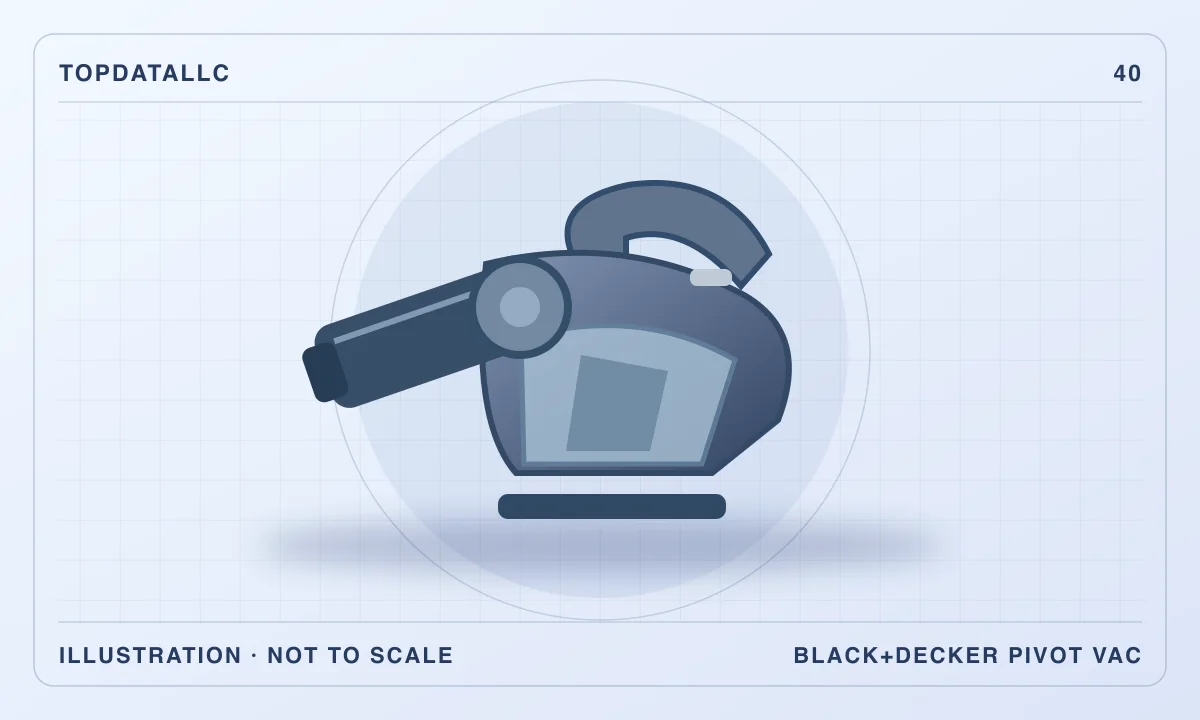
The BLACK+DECKER BDH2000PL Pivot Vac is a handheld vacuum for short dry-cleanup jobs where an adjustable nozzle and built-in tools are useful. It can be a candidate for crumbs around a table, debris in a vehicle or a small mess that does not justify bringing out a larger cleaner. The deciding question is whether the complete body and nozzle can reach the places you need to clean.
This research review covers the BDH2000PL. BLACK+DECKER's product information and care guidance establish the pivoting design, onboard accessories and filter routine. TechGearLab and Vacuum Wars provide independent testing context. Their findings help distinguish useful pickup ability from the separate problem of fitting a handheld machine into a narrow space.
Start with the spaces that defeat your current cleaner
Make a short list of the places you intend to clean. A seat cushion, a drawer corner and the gap between a car seat and console are different access problems. The Pivot Vac's nozzle can change angle, but its motor body still needs room to follow.
Look at the full path into each space. You may be able to point the nozzle toward debris while being unable to move the rest of the machine into a workable position. This is particularly relevant in vehicles and behind furniture. A photograph showing an angled nozzle does not establish access to every gap.
If your main problem is a very narrow or deep recess, compare a cleaner with a suitable hose and slim tool. If the main problem is a reachable patch of coarse debris, the pivoting handheld arrangement may be more useful. Choose around the awkward space you actually have, rather than the most flexible-looking product image.
Read the independent reach findings carefully
TechGearLab praised the articulating nozzle and integrated tools but found difficulty in narrow spaces. That is a meaningful limitation for a product often considered for cars. It suggests you should evaluate body clearance separately from nozzle angle before purchasing.
The same review found strengths with coarse debris and included pet-hair tasks in its assessment. Those findings provide context, rather than a promise for every fabric or surface. A material that releases debris easily can behave differently from a textured mat or upholstery that holds it tightly.
Vacuum Wars also tested this model's pickup and handling characteristics. When comparing reviews, keep the tool configuration and test surface in view. A strong suction result alone does not tell you how comfortably the cleaner reaches under a seat or whether a particular brush is appropriate for a delicate surface.
Decide what onboard tools are worth to you
The BDH2000PL includes an extendable crevice tool and flip-up brush as part of its onboard arrangement. Keeping tools attached can make a short cleanup easier because you do not need to find a separate accessory before beginning.
The trade-off is that the built-in tool design is the one you must work with. An onboard crevice tool may still be too wide or too short for a particular gap. Check the intended spaces, and do not assume integrated tools provide the same reach as a longer flexible hose.
For a household where accessories are frequently misplaced, having the common tools on the machine can be useful. For a vehicle with difficult seat rails and deep recesses, reach may matter more than storage convenience. The better choice depends on which problem occurs most often.
Think in short cleaning sessions
A handheld rechargeable vacuum is most naturally evaluated around a small defined task. Consider whether you want to clean a few crumbs after breakfast or an entire vehicle after a muddy trip. Those jobs ask different things of battery capacity, collection volume and tools.
Independent runtime measurements are useful only with their test conditions. The amount of work you can finish depends on the condition of the battery, the debris and how much time is spent positioning the cleaner. Do not turn a review's runtime into a fixed number of rooms or seats.
If you routinely need a long session, compare a corded option or a larger cordless cleaner with an appropriate battery arrangement. The Pivot Vac can still be useful for quick jobs even if another machine handles the bigger clean. It does not need to replace the main vacuum to have a clear role.
Understand the battery label
BLACK+DECKER uses a 20V MAX designation for this product. That is a battery-platform style specification, rather than a direct measure of suction performance. Compare actual cleaning evidence and tool design rather than assuming a larger voltage label makes one handheld cleaner better than another.
Check the battery and charging arrangement for the exact model. Do not assume it accepts a removable tool battery merely because the brand sells other equipment with a similar voltage label. A handheld appliance with an integrated charging system presents a different ownership routine.
If convenient battery replacement is an important requirement, verify the supported service route before buying. Battery ageing affects rechargeable products, and the practical question is what options are available for this unit. Avoid treating an old review of a new sample as evidence of how every battery will perform years later.
Choose the charging location before ordering
The supplied charging base needs a suitable place and electrical connection. Think about where the vacuum will be returned after a quick cleanup. A convenient location can matter more than a small difference in the body shape because a cleaner left uncharged is less useful when a spill occurs.
Keep the location consistent with the manufacturer's instructions and household circumstances. A kitchen shelf, utility space and garage can have different temperature, moisture and access conditions. Do not assume a rechargeable household vacuum should be stored permanently in a hot vehicle.
Check the lead and base arrangement with the available socket. It should be easy to place the vacuum correctly without straining the cord or balancing the base among other equipment. Follow the model's charging guidance, including any indicator behaviour and initial-use instructions.
Use it for the debris it is designed to collect
This is a dry handheld cleaner. Do not use it as a wet vacuum or infer suitability for liquids from the fact that certain removable parts can be washed. Washing a detached filter is a separate operation from collecting a wet spill.
Read the manual's exclusions for hazardous, hot, sharp or otherwise inappropriate material. A domestic handheld vacuum should not be treated as a general solution for workshop dust or every substance found in a vehicle. Choose specialist equipment and guidance when the material requires it.
For ordinary crumbs and dust, begin with a suitable tool and avoid pressing unnecessarily hard against delicate surfaces. A flip-up brush can change contact with the surface, but it does not establish that every finish can tolerate the same treatment. Check the surface maker's care advice when in doubt.
Plan emptying before the collection bowl is full
The translucent bowl makes it easier to see collected material, but useful pickup also depends on keeping the airflow path and filter in appropriate condition. Do not wait for a completely packed container if the manual calls for earlier emptying or maintenance.
Choose a place where emptying can be done without spreading the contents back into the area you just cleaned. Fine debris can be disturbed during the process. Someone sensitive to dust should consider the handling routine as well as the cleaning performance.
Inspect the bowl closure and reassembly procedure. A convenient emptying design is useful only when it is correctly closed afterward. If a part feels jammed, follow the instructions rather than forcing it. Keep small removable components together during maintenance so that the next cleanup does not begin with a search for a missing piece.
Give filter drying enough time
BLACK+DECKER identifies the replacement filter as PVF110 and lists a separate pre-filter among the included components. That part number is useful when checking ongoing maintenance costs. A generic filter advertised for the brand may be intended for a different handheld family. Verify the compatibility list before ordering a spare. Follow the exact washing and drying directions, and reinstall parts only when the instructions say they are ready. A damp component should not be returned to service merely because the outside appears clean.
This creates a practical maintenance interval. If you wash the filter immediately before you need the vacuum again, it may be unavailable while drying. Plan the routine around how often you use the cleaner, and verify replacement-filter compatibility before buying a spare.
The filter specification should also be kept in perspective. Do not infer allergy-grade or specialist filtration performance from the presence of a washable filter. If fine-particle containment is a central requirement, compare products with the relevant documented filtration and sealing characteristics.
Compare the alternatives that change the job
A narrow hose tool may serve awkward vehicle gaps better than a pivoting body. A larger stick vacuum can be more appropriate if most work is on floors, while a compact handheld can be easier to keep ready for a small reachable mess. A corded cleaner may suit a location where an outlet is convenient and charging is a nuisance.
If pet hair is the main task, compare the tool and the surfaces used in independent tests. A motorised attachment can be relevant for some upholstery, but check the exact bundle and evidence. A generic claim about pet hair does not establish equal performance on every seat fabric.
The Pivot Vac is most attractive when quick access, integrated tools and the changing nozzle angle solve a recurring small cleanup. It is less convincing when the body cannot reach the target, when sessions are routinely long or when the material calls for a different type of cleaner.
Compare the awkward gap before the easy floor
When evaluating the cleaner during an ordinary return period, begin with the space that motivated the purchase. A broad patch of crumbs is easier to reach than the gap beside a car seat. Success on the easy surface does not settle the difficult one.
Check whether you can see the debris while positioning the nozzle. If the body blocks your view or requires an uncomfortable wrist angle, the pivot may provide less benefit than expected. Try the onboard crevice tool and brush only as their instructions permit, and judge whether the entire movement is practical.
Then assess the cleanup afterward. Can you empty the collected material without spreading it, inspect the filter and return the appliance to charge conveniently? Those steps are part of the short-cleaning routine you are buying.
A useful result is a cleaner you reach for readily because it can complete the intended job. If the narrow space remains inaccessible, a different tool arrangement may be a better fit even when the Pivot Vac performs well on open surfaces.
Check the offer and the first-use routine
Confirm the BDH2000PL model number and included charging equipment. Similar BLACK+DECKER handhelds use different nozzles, batteries and filters. Check current manufacturer support and the seller's return arrangements, particularly when considering imported or refurbished stock.
When it arrives, follow the initial charging and setup instructions, then try a representative small job. Check reach, emptying and the return to the charging base. A quick trial on an easy open surface will tell you less than the exact awkward area that motivated the purchase.
Choose the BDH2000PL when those practical checks support its role. The pivot is a useful design feature, but the complete cleaning path decides whether it helps. A sensible purchase combines the right access, an appropriate short task and a maintenance routine you will actually keep up.