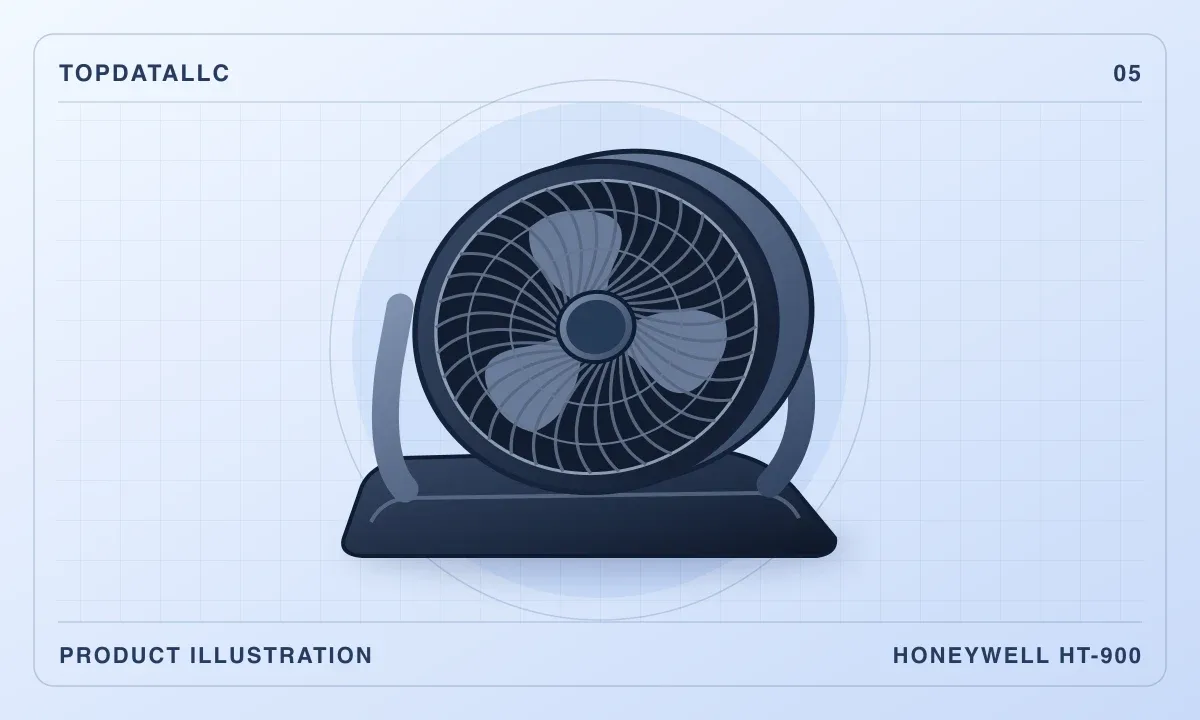
The Honeywell HT-900 works best when you know where you want the air to go. Put it on a desk or side table and aim it at a chair or upward for circulation. The head tilts manually and stays where you set it. For a shared room where people sit in different places, a fan that sweeps side to side may be a better fit.
Measure the space behind it
Honeywell lists the HT-900 at 8.94 inches wide and 6.3 inches deep. The base can fit in a fairly small footprint, but leave enough room to reach the rear speed dial and route the power cord. That extra space can be more important than the width if the fan sits on a shelf. Keep the openings clear and use a stable surface as directed in the supplied manual.
The head tilts upward, which gives you options if the available surface is below desk height. It does not oscillate. If you want to send air across the room in changing directions, choose an oscillating model and check how much clearance it needs.
Think about when you change the speed
Good Housekeeping found the controls straightforward and noted the lack of a remote. Bob Vila found the fan useful on a side table and noted that it lacked a timer. If you expect to adjust the speed from bed, or want the fan to switch off after you fall asleep, compare models with those features before buying. Sound is also personal. Airflow that blends into an office can be more noticeable beside a bed.
The HT-900 makes sense for a regular seat or a small surface where manual control is easy to reach. A fan moves air and can make a person feel cooler. The room itself needs a different solution if the aim is to lower its temperature. The linked black model is the US electrical variant. Match the plug and electrical rating to where it will be used. This guide draws on manufacturer specifications and published independent evaluations.