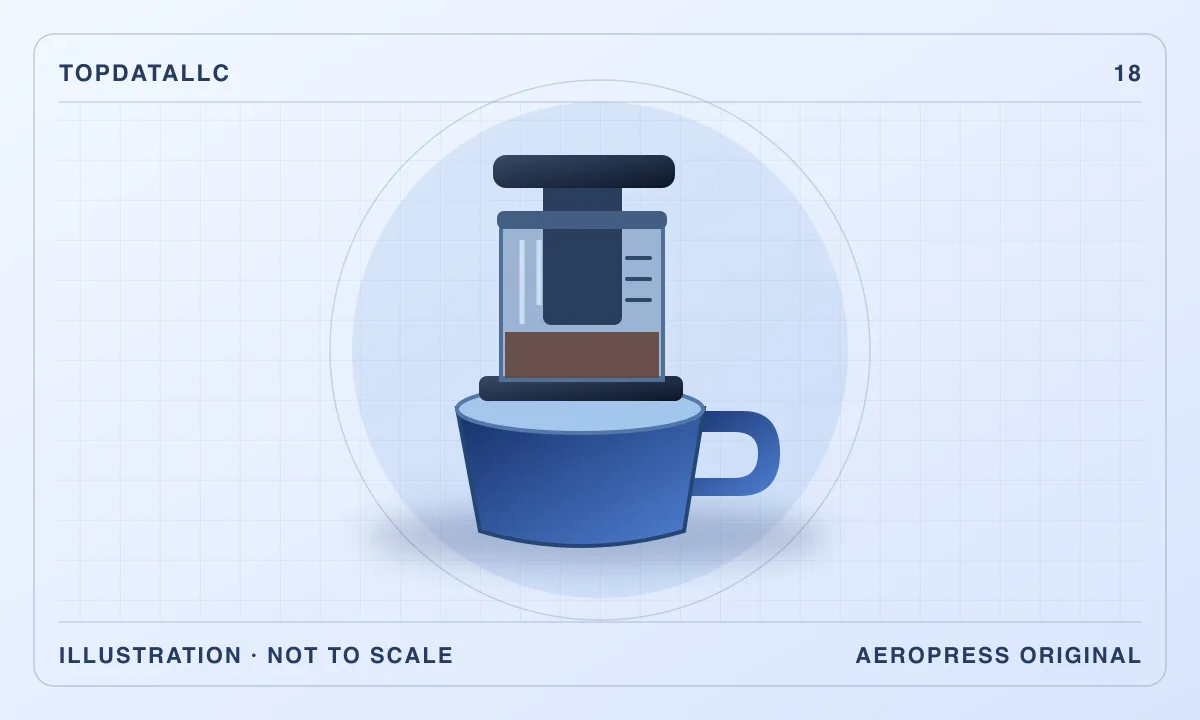
The AeroPress Original suits someone who brews a mug at a time and wants a small brewer that can be cleared off the counter after use. Coffee and hot water meet in a chamber, and you press the brewed coffee through a filter into a mug. The basic upright process asks for little besides a stable mug, a hot water source and ground coffee. It also leaves you in charge of each cup, which can be convenient for one person and slow when several people are waiting.
This review covers the AeroPress Original sold in the linked US listing. The Original uses standard AeroPress filters. The larger XL and the travel-focused Go have different designs and package contents. The maker's instructions and published independent comparisons inform the assessment. Check the contents of the exact kit before deciding which accessories you need.
Choose for the cup you actually drink
Think about how much coffee you drink in one sitting. The Original can make a concentrated brew you dilute to taste, or you can follow a recipe intended to produce a smaller serving directly. Dilution changes the strength in the mug. It does not add brewed coffee to the amount you started with. If your usual cup is large, decide whether you like a stronger base topped up with hot water or would prefer a brewer that makes the full amount in one pass.
The press is a sensible choice when you and another person want different beans or strengths. Prepare one serving, clear the chamber and make the other one separately. That flexibility is less useful when several people want the same coffee together. A larger French press or a suitable batch brewer can simplify serving a group. The AeroPress XL is another model worth comparing if you like the press mechanism and regularly need more volume. Check its own filter size and the vessel you will use below it.
The compact body is helpful if the machine has to go back in a cupboard, but consider the complete setup. You need a way to heat water, and a grinder if you buy whole beans. A spoon or stirring tool, filters and a place to dispose of the grounds also belong in the picture. If you already have these things, the brewer can be a small addition. If you are building an entirely new coffee setup, consider the space and time required by the other pieces as well.
Start with the manufacturer's upright method
Read AeroPress's current instructions for your kit. The basic setup places a filter in the cap, attaches the cap to the brewing chamber and sets the chamber on a sturdy mug. Add the coffee and hot water in the sequence the instructions describe, then press gently into the mug. The mug and brewing surface need to stay stable while you press. Avoid a fragile, narrow or unstable vessel and use a cup that supports the brewer evenly.
Press slowly and stop if the setup becomes unstable or the plunger is unusually hard to move. Check the cap, filter and grind according to the manufacturer's guidance before trying again. Pushing harder on a poorly supported setup can make it harder to keep control of hot liquid. The basic upright method is a useful starting point because it lets you learn how the chamber sits and how the press feels without needing to turn a filled brewer over.
AeroPress warns that brewing upside down increases the risk of a spill or burn. There are plenty of upright approaches to explore before changing the orientation of the brewer. If a particular result depends on slowing drainage, the maker documents separately sold filter caps designed for that purpose. First see whether the standard cap, filter and an upright recipe give you the result you want. A small amount of liquid entering the cup during brewing is part of the behavior you can evaluate with that setup.
Adjust one thing after the first cup
Start with a grind and coffee amount you can reproduce. If your coffee is pre-ground, keep that bag and the same spoon or scale for the first few brews. Follow one repeatable recipe before changing the coffee, amount, water and timing. For a cup that tastes too strong, try adding a little water in the mug first. For a cup whose flavor you dislike even after dilution, look at the bean, grind and extraction rather than treating strength and flavor as the same problem.
Keep a simple record of the change you make. You might use the same dose and water and adjust the grind one step, then compare the resulting cup with yesterday's. If the press becomes unusually resistant, consult the maker's instructions before trying a finer grind again. A repeatable brew is more helpful than a complicated recipe you cannot reproduce when you are in a hurry.
Use the temperature and recipe guidance for the equipment and coffee you have. If your water source varies, taste differences may come from more than the brewer. When you take the press to another kitchen, repeat the recipe with the available water and let taste guide any changes. You can keep the brewer and coffee fixed while identifying whether a practical adjustment, such as adding water to the final cup, is enough.
Decide whether a paper filter suits your routine
The Original uses the standard size, according to AeroPress. Paper filters give you a fresh filter for each brew and make cleanup straightforward. If you brew often, check how many filters come with the exact kit and how easily you can restock them. The XL uses a different size, so match the filters to the brewer before ordering supplies or borrowing filters from someone else.
A compatible reusable metal filter is a different choice. It reduces the need to carry spare paper, but you have to wash the filter and judge whether you like the cup it produces. A paper filter and a metal filter can let different amounts of fine material and oils reach the drink. Try the standard filter first if you have it, and decide whether a change in cleanup or cup texture would help. The included filter arrangement is the best comparison point before buying accessories.
Think about where the wet grounds go. The maker describes removing the cap and expelling the grounds after brewing. Use a suitable container and handle the equipment carefully while it is warm. If you brew in an office, check whether there is a nearby bin and sink. It can be easier to clear a compact press than to leave grounds in a communal kitchen, but the advantage depends on whether you can rinse and dry the parts without getting in someone else's way.
Compare it with the brewers you might actually use
A pour-over cone makes sense if you like controlling the pour and want a brewer with few moving parts. Its workflow puts more attention on the way water passes through the coffee bed. The AeroPress Original lets the coffee and water sit together in the chamber before you press. If you already enjoy a pour-over and have a good setup for it, choose a press only if the difference in workflow, cup style or cleanup solves a specific problem.
A French press can be useful for several servings in one vessel and for people who like the texture of a metal-filtered cup. Think about whether cleaning wet grounds from the pot is inconvenient in the kitchen you use. A batch machine gives you a separate way to brew while doing other things. If you need several mugs at once or want coffee ready on a schedule, compare the batch workflow before choosing a manual brewer for the whole household.
AeroPress describes some recipes as espresso-style. If your goal is the experience of a traditional espresso machine, including the way the shot is produced and its texture, compare equipment intended for that job. An AeroPress concentrate can be useful for mixing a drink with milk if you like the flavor and concentration you get. Decide whether you want a practical coffee base for a drink or an espresso-making setup before comparing tools.
Plan the travel or office version of the kit
Set out the items you need to make a cup away from home. The Original's chamber and plunger are compact, but the kit still needs a stable mug, water and a way to manage grounds. Check whether a kettle is available and whether you can rinse the press afterward. Take enough compatible filters for the trip. A small container for ground coffee can be easier than carrying a grinder if you are only away for a short time and accept that trade-off.
For regular travel, compare the Original with a model designed to pack into its own cup or travel container. The Original may suit you if you already bring a mug or can use one safely at the destination. A travel kit can save space across the whole setup even if its individual brewer is smaller. Check the serving size, how the parts pack and whether you can clean them between uses. Choose for the trip you make often.
At work, check the shared kitchen at the time you normally brew. If the kettle, sink and bin are close together, a small press is easy to put away after use. If hot water is only available in another room, carrying a filled brewer between surfaces is an awkward plan. Keep the brewing and pressing on the same stable counter. Set out the cup and filter before adding water so you can complete the process without moving it.
Check how the brewer fits into cleanup and storage
A press is easy to store if all the pieces have a place to go. Decide where a rinsed chamber and plunger will dry and where the filters will stay dry before use. Keeping the filter packet away from the wet side of the counter helps avoid sacrificing paper after each brew. If you put the parts in a drawer, check the room needed to lift them out without dislodging other equipment.
Pay particular attention to how the plunger moves after cleaning and how the cap fits before you add hot water. Consult the maker's instructions for normal care and replacement seals. If you buy an older press or a spare cap, confirm that the part matches the exact brewer. This is especially worthwhile if you use it daily and would prefer to replace a worn part instead of the whole kit.
Who should buy the AeroPress Original
Choose it if you brew one cup at a time, have a stable mug and a place to heat water, and want to vary strength without keeping a larger appliance out. Choose a batch brewer or larger press if several full cups at once are the daily job. If you like the Original's method but want a self-contained travel system, compare the travel-specific kit and decide whether its packaging solves a problem you actually have.
Before ordering, plan one ordinary cup from heating water to cleaning up. Picture where each part will sit and how you will get the next filter. If that sequence works in the kitchen or office where you drink coffee, the Original offers an adaptable manual method with a small footprint.