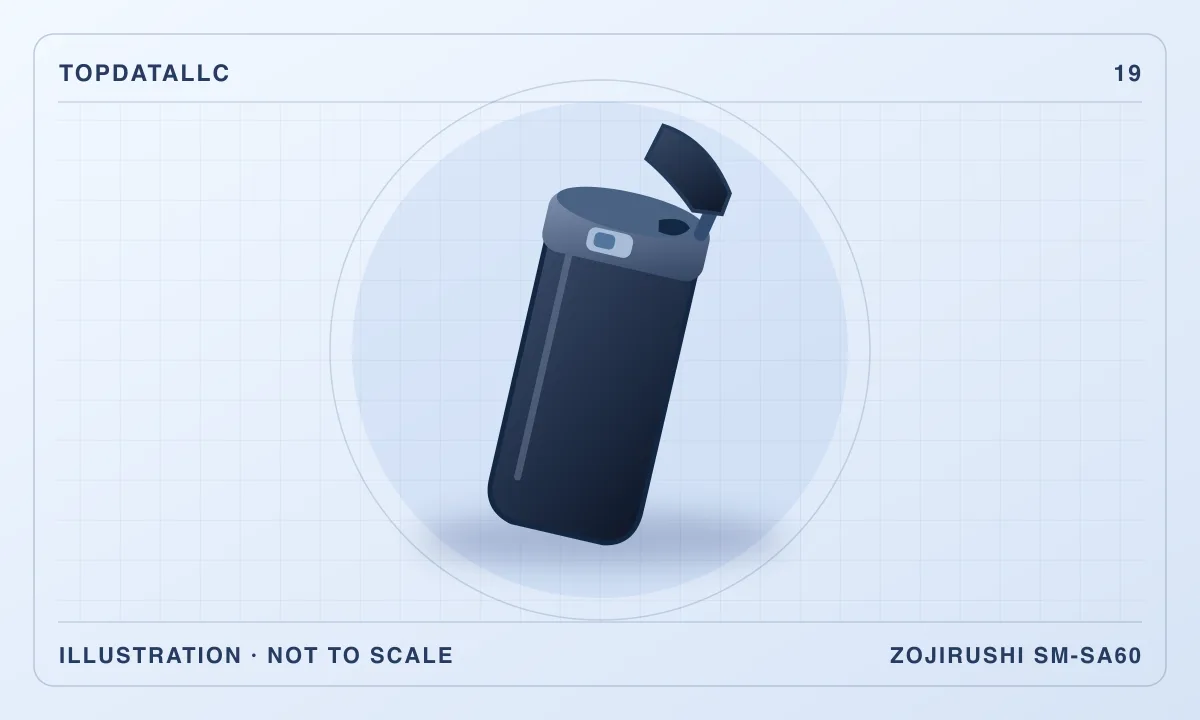
The Zojirushi SM-SA60BA is a narrow 20-ounce vacuum-insulated mug with a flip-open drinking lid and a lock. Its appeal is carrying a substantial drink in a slim container and opening it without unscrewing a whole lid. The trade-off is a lid with several parts to clean and reinstall correctly. If the mug spends most of its time upright on a desk, that mechanism may be more than you need. If you carry coffee or tea in a bag, the lock and the way the lid seals deserve a closer look.
This review covers the black SM-SA60BA US listing and uses the manufacturer instructions for the SM-SA family. Zojirushi sells other mug lines with different lids, cleaning instructions and parts. The model identifier is more useful than the brand name alone when comparing replacements or reviews. Independent travel-mug coverage of the same model informs the practical assessment.
Decide how the mug will travel
Start with the narrowest place you expect to put it. A bag pocket, car cup holder and bike bottle cage have different shapes and ways of holding a bottle. Check the exterior dimensions of the specific mug against the full opening and any ledge inside the holder. A wide opening can taper farther down. A tall mug can also fit the opening and still get in the way of a dashboard control or bag flap. Set a similar container there before assuming the fit.
The slim shape may be useful if you often carry a laptop, notebook and bottle in the same bag. Decide whether the mug can ride upright and whether its lid has room around it. Treat the lock as part of the closing routine. A latch under pressure from another item can be harder to see or operate. Put the mug in a dedicated pocket or a position where you can confirm it is closed before walking away. Keep hot drinks apart from electronics where possible.
The extra capacity is useful if you drink slowly through a long commute or want more than one small serving. A shorter mug may be easier to clean, place under a coffee dispenser and put away. Check where you fill it. A compact espresso machine or water dispenser may require you to pour into the mug from a separate container. That small extra step is fine if you value capacity. If you do it every morning and seldom fill the mug, a shorter version can be the more convenient choice.
Learn how the lid closes before trusting it in a bag
The lid has a flip opening, a latch and a lock. Use the manufacturer's instructions to understand which pieces seal the lid and how they fit together. Close the lid firmly as directed and engage the lock before packing. Check the lock after washing or reassembling the lid. Familiarity with the sound or feel of the closure is useful, but verify the actual position when you are carrying a drink near something you want to keep dry.
Try the lid with cool water at home before using it on a commute. Fill below the manufacturer's limit, close it and check for drips over the sink. Then open it upright and see how the water flows at the angle you normally drink. The test is useful after disassembly too, especially if you removed a gasket. A dry outside after a brief check is evidence about that assembly and use. It cannot account for a damaged part or a cap that is not secured the next time.
If a lid starts to leak, look at the gasket seating and confirm that each piece is fitted in the orientation shown in the manual. Clean the sealing surfaces and inspect for damage. Avoid substituting a similar-looking gasket from a different model unless Zojirushi lists it as compatible. If you cannot get a secure fit after following the instructions, stop carrying it with liquid until the issue is resolved.
Use the insulation for the temperature you prefer
The mug's vacuum-insulated body is designed to slow heat transfer. That is useful when the gap between filling it and drinking is long. If you mainly want to sip a hot drink soon after making it, the same insulation can keep it hotter than you want. Let the drink reach a suitable temperature before closing the mug or pour a small amount into a separate cup when you are ready to drink. Open it upright and take care with hot liquid.
Manufacturer retention figures reflect a particular starting temperature, fill level and test environment. An independent review's results likewise describe the sample and procedure it used. A half-full mug that is opened repeatedly during a commute can behave differently from a filled mug left closed on a bench. Use published figures to compare broadly, then judge whether your own drink stays at a useful temperature for your ordinary routine.
If you use it for cold water as well, consider how you fill and clean it. A slim neck can be less convenient with large ice cubes or a dispenser with a wide spout. Check what fits before buying it specifically for that use. The manual sets out liquids and conditions to avoid, including carbonated beverages and other contents unsuitable for the container. Check the instructions if you want a mug for anything beyond ordinary drinks like water, coffee or tea.
Decide whether you like drinking from the flip lid
The flip top gives access to a drinking opening without lifting off a separate cap. It can be convenient on a walk or between tasks. Think about the angle you need to tip the mug and whether you can see the opening. A person who prefers sipping from an open rim may find a plain cup or an alternative lid more comfortable. The lock is useful for carrying but adds a step every time you open it after transport.
Try the opening routine with the hand you normally use. You may find it straightforward to unlock and open while sitting at a desk and less convenient when wearing gloves or holding other things. Choose a lid for the setting where you use it most. If you drink at a desk and rarely carry the mug closed, a simpler lid might offer enough protection against splashes with less to clean. If you want to pour into a cup instead of drinking from the mug, a bottle with a dedicated pouring lid may suit that routine better.
Think also about where the open lid sits relative to your face. Different mug designs let you drink with different head and wrist positions. Check whether the flip top stays clear of the rim as you tilt it. A good fit is partly personal. If you can handle the exact model in a shop or borrow a comparable lid, try the motion before choosing based on capacity or appearance.
Give the lid a cleaning routine you can repeat
The SM-SA manual calls for hand washing and describes disassembling parts of the lid. Follow that manual rather than assuming the instructions for a newer Zojirushi mug apply. Use the cleaning methods it specifies for the body, lid and seals, let the parts dry and reassemble them correctly. Check whether your usual brush reaches the base of the body and whether you can see enough to tell that it is clean.
If you drink coffee or tea most days, plan to rinse the mug after use and wash the lid at a time you can let it dry. The sealing pieces and drinking opening deserve attention because they are harder to see than the outside. Set parts out in order when you clean them for the first time. Use the diagram to confirm how they go back together. If you tend to put all your drinkware in a dishwasher, the hand-wash directions are a practical reason to compare a model explicitly rated for the dishwasher.
Check how you would replace a worn part before expecting to use the mug for years. Use the exact model number and the manufacturer's parts resources. Confirm that the piece you need is available in your market. A removable lid makes cleaning possible and can make a repair practical when compatible parts exist. If you cannot verify part fit, treat that as uncertainty when comparing it with a design whose replacements you can obtain.
Match the size and closure to the rest of the day
For a desk, compare a wider insulated cup that is easier to fill and wash. It might be a better fit if you rarely put a full mug into a bag. For a long day out, consider a larger insulated bottle if you want to pour several portions, or a shorter locking mug if you usually only want one small coffee. A bottle and separate cup take more space, but they can be useful if you want to control the size and cooling of each serving.
Consider keeping a small cup for at-home drinking and using the travel mug for the part of the day when it solves a carrying problem. That can help if you dislike the lid at your desk but need a secure closure for your bag. Alternatively, if your bag has a reliable upright holder and you carry only cold water, compare a bottle designed for that job. Choose around the closure, drinking motion and cleaning routine you actually need.
Plan the refill you make away from home
If you refill at work or at a station, check whether there is room to hold the tall body upright below the spout. The lid needs a clean place to rest while you fill it, and the mug needs to stay below the manufacturer's fill limit. A narrow opening that is easy to drink from can be less convenient if you regularly pour from a wide kettle or if the counter is crowded. Try your filling method with a similar container before buying for that routine.
Think about the drink you will refill with. If you switch between coffee and water, a lid and gasket that are easy for you to rinse between fills matter. If you only use it for coffee and wash it once after the commute, the cleaning routine may be simpler. The better capacity is the one that fits the fill, carry and cleanup steps you do most often.
If your mug lives in a work locker between trips, measure that space with the lid open as well as closed. A shelf may hold the mug while it is packed but leave little space for air to circulate around a lid you have just washed. Choose where it can dry without getting knocked over.
Who should buy the SM-SA60BA
Choose the black 20-ounce SM-SA if you want a slim insulated mug with a locking flip top and can give the lid the attention it needs after washing. Compare a shorter model if cup-holder height, filling clearance or weight when full matters more than capacity. Compare a simpler lid if the mug mainly sits beside a keyboard or you want a quicker cleaning routine.
Before ordering, check your holder, the place you fill it and the way you want to drink from it. Then check the model-specific manual for cleaning and replacement parts. When those decisions line up, the locking lid and tall, slim body have a clear purpose. The mug is a better purchase when you know where those features will help in a normal day.