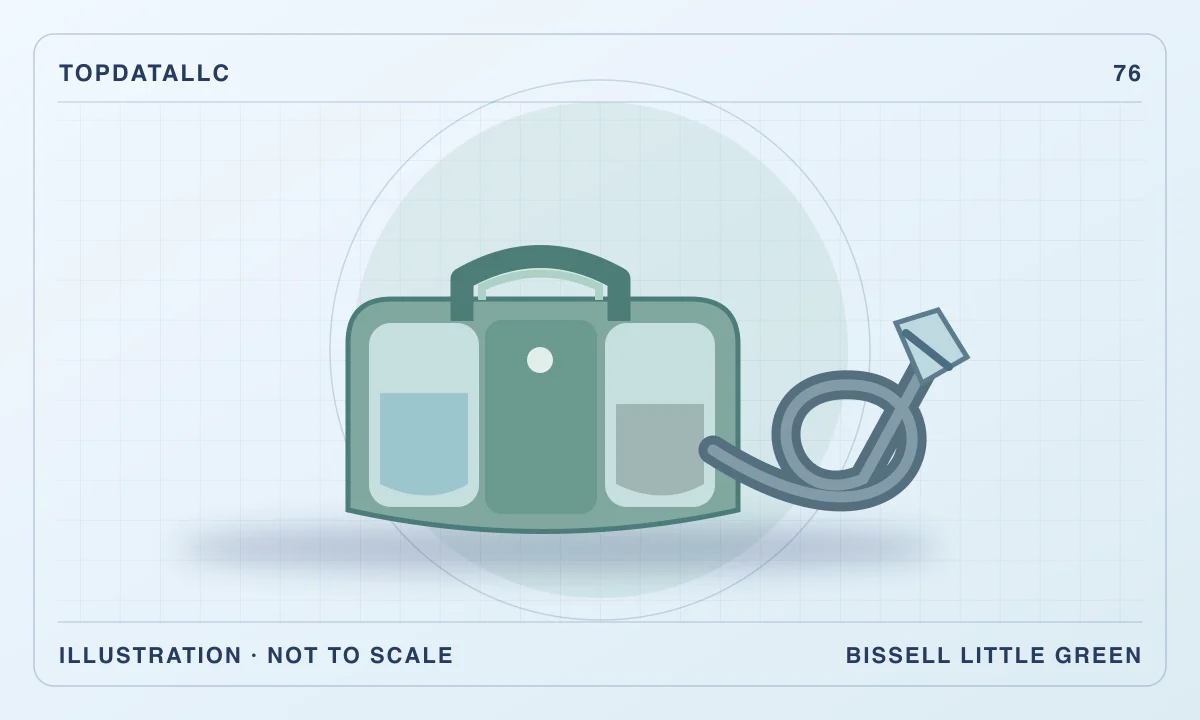
The Bissell Little Green 1400B is most useful for a small, water-cleanable fabric mess that needs more than wiping. It sprays cleaning solution, lets you work the area with a hand tool and extracts liquid into a recovery tank. Its appeal is targeted cleaning without bringing a full-size carpet machine into the room; its cost is the preparation, drying and cleanup that follow every job.
This review covers the green US 1400B. Little Green is a wider product family, and HydroSteam versions or newer packages should not be treated as the same machine. We use Bissell’s specifications and 1400-series instructions alongside Reviewed’s original 1400B evaluation. The recommendation depends first on fabric compatibility, then on whether you are willing to do the wet-cleaning work.
What the machine actually does
The Little Green separates clean solution from recovered dirty water. A hose connects the machine to a small hand tool, and the user supplies the movement and brushing. This is different from a dry vacuum removing loose crumbs, and different again from a large carpet cleaner with a floor head designed to cover a room systematically.
That distinction helps define reasonable jobs. A small area on compatible upholstery, a local carpet mark or an appropriate car-interior spot can suit a hand tool. Cleaning an entire large carpet with that same tool involves much more time and repeated movement. If the whole floor needs treatment, compare a full-size rental or professional service instead of assuming portability makes the small machine equally suitable.
The 1400B is not a steam cleaner. Bissell specifies hot tap water as directed, not boiling water, and the machine’s method is spray and extraction. Do not infer sanitising or sterilising performance from the sight of dirty water entering the tank. Those are different claims requiring evidence that is not established by ordinary fabric cleaning.
Check the fabric before filling a tank
Bissell’s instructions tell owners to inspect upholstery care tags. W or WS indicates the relevant water-cleaning category, while dry-clean-only or incompatible S-marked fabrics should not be treated with this machine. If a tag is missing or unclear, obtain guidance from the furniture supplier rather than guessing based on appearance. A soft fabric is not automatically a water-cleanable fabric.
The colourfastness check in the instructions also matters. A hidden test area can help reveal an unsuitable response before a visible panel is treated. Follow both the furniture manufacturer’s requirements and the machine instructions. If they conflict or remain uncertain, pause rather than assuming a stronger cleaning product or a shorter pass will make the combination acceptable.
Consider what is underneath the visible surface as well. The machine extracts liquid, but it does not make the fabric instantly dry or prevent water reaching areas you cannot see. Avoid over-wetting and follow the supplied method. Delicate materials, valuable furnishings and unexplained stains may justify professional advice before a portable extractor becomes part of the plan.
The size is portable, not weightless
Bissell lists a dry weight of 9.65lb, with a 48oz clean-water tank. Water and recovered liquid add to what you carry. That matters if the machine will live upstairs, in a high cupboard or in a garage away from the sink. Assess the complete handling task rather than choosing it solely because the body looks small in a photograph.
The maker lists a 15ft power cord and a 4ft hose. Those dimensions make location planning important. You need a suitable outlet and a stable place for the body close enough to the job. Moving the tool around a car seat is a different task from cleaning a flat rug beside the machine, especially when the cord route is constrained.
For stairs, think about the body’s placement and the movement involved before starting. Follow the manual’s precautions and do not create a situation where the unit or cord can be pulled from an insecure position. Portability means you can relocate the machine between suitable positions; it does not mean any balancing arrangement is sensible.
Formula choice is part of compatibility
Use the Bissell portable-machine formula and dosing instructions appropriate to the supplied machine and formula revision. The tank marks and product directions should control the mix. Do not substitute dishwashing liquid or combine arbitrary cleaning products because another appliance or an informal tip appears to use them successfully. Foam and chemical compatibility are part of the machine’s design requirements.
Reviewed’s article contains a suggestion that specialised cleaners are unnecessary. We do not adopt that advice because it conflicts with Bissell’s manufacturer instructions. Independent testing is useful for understanding handling and results, but the relevant maker’s operating restrictions remain the appropriate reference for filling and maintaining the machine.
Budget for formula as an ongoing consumable. A trial bottle, when included, is not an indefinite supply, and retail tool bundles can differ. Check the current package rather than assuming a review photograph shows everything in the offer you are buying. An apparently cheaper listing may have different accessories, condition or supplied consumables.
Cleaning requires patient extraction
Follow the manufacturer’s sequence for preparing the machine, applying solution and extracting it. The hand tool makes targeted treatment possible, but you still perform the brushing and repeated movement. More liquid is not automatically more cleaning. A controlled application and extraction routine is preferable to repeatedly soaking an area because the first pass did not remove every visible mark.
Reviewed found the machine straightforward to operate and useful on rugs and upholstery, while also describing the work as wet and time-consuming. That is a helpful expectation. This is not a product that replaces the whole task with a button press. The useful improvement is having spray and liquid recovery in one small tool, not avoiding the physical effort altogether.
Keep the objective modest and inspect the result as the material dries. A stain’s appearance while wet may differ from its final appearance. Neither dark recovered water nor a satisfying clear tool head proves that every mark has gone or that the fabric is completely clean. If progress stops, reassess compatibility and the stain instead of escalating with unapproved heat or chemicals.
Drying belongs in the schedule
Extraction removes some moisture, but the treated material still needs time and suitable conditions to dry. The result depends on the fabric, amount of liquid, room conditions and how the job was done. We would not attach a universal drying time to the 1400B. Plan the work for a time when the chair, rug or car seat can remain unused as necessary.
A small apartment can make that requirement more significant than the machine’s storage size. Cleaning a sofa cushion shortly before guests arrive may leave you with nowhere convenient to put it while it dries. Think through the available space and normal ventilation before starting. The ability to carry the cleaner easily does not eliminate the need to leave the cleaned item alone afterwards.
For a car, arrange the job around access to power and a realistic drying opportunity. Do not rely on the machine to make a seat ready immediately before a journey. Follow the vehicle’s material guidance and avoid electrical components or areas not intended for wet treatment. If the use case is frequent whole-interior cleaning, compare tools and services designed for that workload.
Tanks are the everyday handling compromise
Reviewed’s main criticism was awkward tank handling and a tendency to spill when carrying the tanks. That is a specific ownership issue worth taking seriously. The task includes filling near a sink, seating the tank correctly, removing dirty water and cleaning the parts afterwards. It is not finished when the visible stain looks better.
Establish a clear route between the work area and a suitable sink, keep the machine level as directed and use the tank handles and closures properly. Follow the manual rather than carrying a full, loose tank casually across a furnished room. A little preparation is easier than cleaning a second spill created by transporting the first one.
Check the recovery tank level and the supplied emptying guidance during use. Do not assume the clean tank’s capacity describes an unlimited working session. If pickup changes, stop and inspect the parts the manual identifies, including whether the tanks are correctly fitted. Repeatedly continuing with poor recovery can add water without solving the original problem.
Cleanup determines whether you will use it again
The hose, tool and recovery tank need after-use attention. Follow Bissell’s rinse and storage directions so the machine is not put away holding dirty water or residue. This is an important difference between a product that seems convenient during a demonstration and a tool you are happy to use repeatedly at home.
If a hose-cleaning accessory is included in your package, follow its specific instructions; do not assume all 1400B retail bundles contain the same one. The underlying requirement remains cleaning the wetted parts appropriately. Leaving that step for much later can make a short spot-cleaning job less pleasant the next time you open the cupboard.
Allow cleaned components to dry as instructed and choose storage with room for the hose and cord in their intended positions. A small cupboard is useful only if you can put the machine away without kinking the hose or trapping damp parts. Before buying, picture the entire stored shape rather than only the central body.
Check replacement parts by model
Keep the 1400B model information with the machine instructions so you can identify suitable tools and replacement parts later. Similar-looking Little Green accessories are not automatically interchangeable across the whole product family. If a tool wears or recovery becomes poor, consult the model’s troubleshooting guidance before ordering a part based only on appearance.
That check is especially useful when comparing a new unit with a used offer. Inspect the included tanks, closures, hose and tools and consider the cost of missing parts. A bargain that needs several replacements may be less convenient than a complete package, even when the motor itself runs.
Compare the right alternatives
For loose crumbs and ordinary dry debris, a dry vacuum such as the Black+Decker Pivot is the relevant type of tool. It does not perform the Little Green’s wet extraction job, and the Little Green does not replace routine dry vacuuming. Decide which mess is recurring before buying another appliance for a problem you already have equipment to handle.
For larger carpet areas, a full-size cleaner, rental or professional visit may be more efficient. For an occasional small mark, the fabric maker’s approved manual method may be enough. The Little Green occupies the middle: it gives you a reusable extraction tool for compatible localised jobs, provided you accept setup, consumables and maintenance.
If lifting, kneeling or repeated hand-tool movement is difficult, consider the handling burden carefully. The fact that a product is smaller than an upright cleaner does not make every part of its use effortless. A demonstration with an empty machine can also understate the practical weight and wet cleanup. Choose around the person doing the work, not only the cupboard where the machine will fit.
Verdict
The green 1400B is a reasonable choice for recurring small messes on verified water-cleanable fabric. Its separate tanks and hand tool can make targeted extraction more practical than manual wiping alone. Confirm the exact model, current tool bundle, approved formula and return terms before ordering, and include ongoing consumables in the cost.
We would skip it for incompatible upholstery, expectations of steam treatment or a mainly whole-room workload. The strongest reason to buy is a clearly defined spot-cleaning need and a willingness to complete the wet-cleaning process properly. If you have a suitable place to fill, work, dry the fabric and clean the machine, the Little Green has a useful role; without that plan, its compact size can disguise more work than expected.