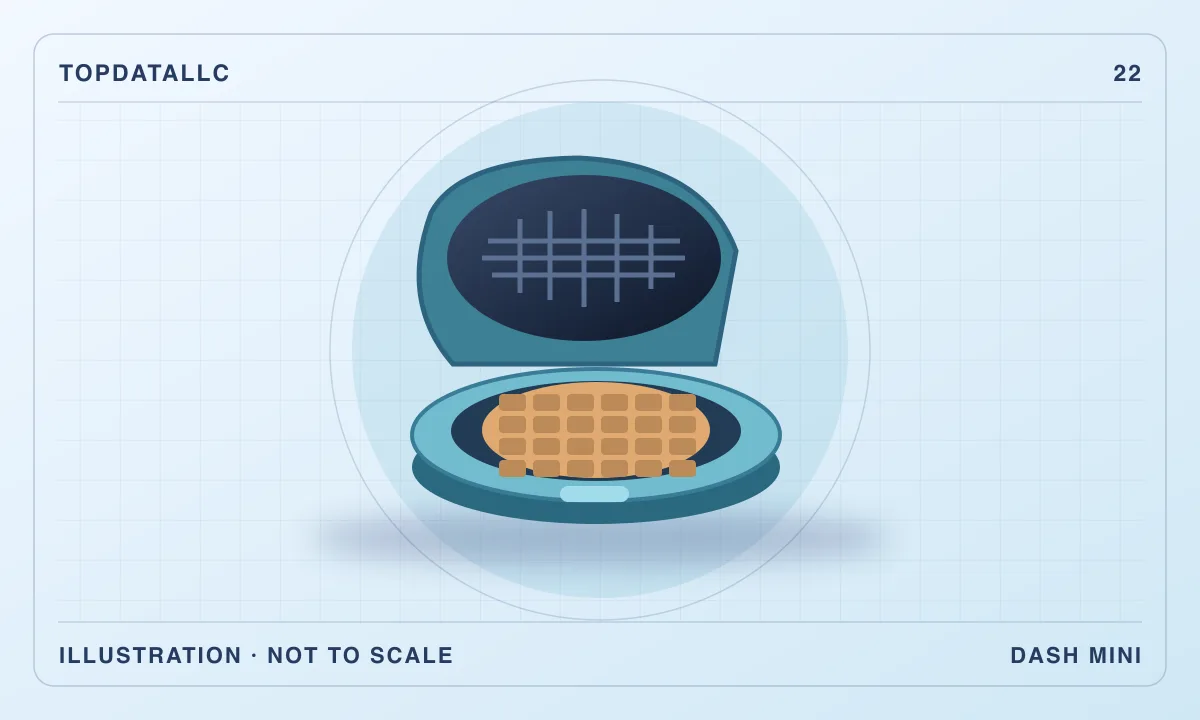
The Dash Mini Waffle Maker is a small clamshell iron for someone who wants snack-size waffles and has room to make them one at a time. The aqua US model linked here has a four-inch cooking surface. A small iron is easy to fit on a counter, but it is worth thinking about how many waffles you want to serve together and how you will clean fixed plates. The size can be either its main advantage or the reason to choose a different model.
This review draws on Dash's model information, instructions and independent coverage of the Mini Maker. Dash sells larger waffle makers and mini appliances with other plate shapes. Check the actual listing for the round waffle plates, finish and included material. Buy around the food and the routine you want rather than assuming that all similarly sized Dash products work the same way.
Decide how many waffles people will expect at once
Start by looking at a familiar serving. A four-inch waffle can be useful as a snack or part of a plate with other food. It does not cover the same area as a larger breakfast waffle. If someone usually wants several at once, the small iron needs several turns. Think about whether you enjoy making each portion as you go or need the whole plate ready together.
For one person making a quick breakfast, a single small iron can fit neatly beside the ingredients. You might cook a portion, add the topping and eat while another serving is optional. The same equipment can slow down a family breakfast. Everyone waiting for one small waffle changes how the cooking feels, even if each cycle seems reasonable. A larger iron or one that makes multiple waffles in a cycle may be more useful for that job.
The size can also suit a cook who wants to try a small batch and see how it turns out. A snack plate can use several differently topped waffles without needing a large iron. The small plate gives you little spare room for ingredients that spread unpredictably. Use a recipe compatible with the appliance and follow the maker's guidance for how much mixture to add. Try the first waffle before filling the machine again.
Make a safe place for the lid to open
Measure the counter position with room for the cord and lid. A cabinet above a small appliance can still get in the way when you lift the lid. Find a level, appropriate surface and follow Dash's electrical and placement instructions for the unit you receive. Choose a spot where the iron can stay put while it heats and cools, with space to put the batter and utensils on either side.
Look at the direction you approach the iron. You need to reach the lid by its intended handle, add the batter and lift out the waffle without leaning across a hot surface. If the only free spot is in a corner behind other equipment, compare whether it is easier to clear space first or use a different location. The small housing makes it portable while cool. It still needs the operating clearance and care described by the manufacturer.
Check the cord route before mixing batter. Keep the cord from being tugged or trapped and use the power supply specified for the exact US appliance. If you are outside the US, choose a documented local-market model. A small size can make an appliance look suitable for a dorm or travel, but accommodation rules and the available kitchen surface matter. Confirm both before packing it.
Treat the light as a setup cue
Dash describes a preheating indicator. Use the model's instructions to understand when it is ready for batter. The indicator's role is to tell you about the appliance's heating state. The waffle itself needs to be judged according to the recipe and the instructions. Batter thickness, amount and the result you want all affect how long the first trial takes.
Allow the iron to preheat as directed and prepare a measured portion of batter before opening it. Start with the model guidance for filling. Too much batter can spread beyond the wells as the lid closes. A smaller first portion lets you see how far the recipe spreads. If it leaves the outer wells empty, adjust the next portion gradually. Choose a repeatable spoon or scoop once you have a practical amount.
When the waffle is ready, remove it with a suitable utensil that won't damage the nonstick plates. Make sure there is a clear spot to set the food down. If you want to compare results between batches, note which quantity and recipe worked. The next batch may behave differently after the machine has been open for a while. Use the instructions and the result you observe rather than assuming the exact same time works for all batter.
Try the batter you intend to use
A classic waffle batter that the manufacturer recommends gives you a useful starting point. A thicker mix may need help reaching the outer grooves. A thin batter can spread quickly. Follow the directions for the specific mixture and appliance. If you add pieces such as fruit, think about their size and how they might sit between the plates. A small plate has less space for a thick or irregular addition.
Some buyers use mini waffle irons for recipes beyond a standard breakfast waffle. Treat each recipe as its own cooking task. Check that the instructions suit your model and that the mixture can cook and release safely in the plates. A result that works for one batter or ingredient combination may leave a mess with another. Begin with a recipe designed for a small iron so you can judge what the appliance handles before changing ingredients.
Plan the topping separately if you want to keep the process tidy. A small round waffle gives you a short distance from the center to the rim. Adding several wet toppings before serving can make it harder to pick up. If you are making several as snacks, consider cooking them first and adding the toppings on the plate. This keeps sticky additions out of the cooking grooves and makes it easier to compare the waffles themselves.
Account for fixed plates during cleanup
The nonstick cooking surfaces are part of the appliance. Follow the maker's cleaning instructions and allow the iron to cool after unplugging it as directed. Clean the plates and accessible edges with the methods permitted by the manual. Keep the electrical body out of water. The fixed design is simple to store, but you cannot lift out the cooking plates and take them to the sink.
Look at what tends to stick around the rim during a normal batch. A little care with portion size can reduce what collects outside the wells. If batter escapes, follow the directions for cooling and cleaning before putting the appliance away. A deep groove can need more attention than a flat pan even when the waffle releases easily. If the food you want to cook is likely to leave a lot of residue, compare models with removable plates.
Decide where the machine will cool and dry before storage. A compact appliance is convenient once it is ready to go back in a drawer. It is less convenient if it occupies the one counter spot you need for something else while it cools. Make the cleanup part of your first trial. A quick cooking cycle is only useful if setting up and clearing away also fit the time you have.
Compare the Mini Maker with the appliance you need
Choose the Dash if the usual job is one or a few small waffles and the simplest possible footprint matters. A larger iron is more suitable if you want several portions at the same time or need the size of one full breakfast waffle. Check how wide it is with the handle and how much space it needs with the lid open. The larger model may still fit your kitchen and reduce the number of separate batches.
An iron with interchangeable or removable plates is worth a look if cleaning or making several shapes is the priority. The extra parts need their own space, and you need to check which can go in water or a dishwasher. If you rarely make waffles, using a pan for pancakes or buying a different breakfast option may cover the need with equipment you already have. A dedicated iron makes the most sense when you want the waffle shape and texture often.
Before ordering, choose one normal breakfast and lay out the batter, topping, serving plate and the spot where the appliance would cool. Estimate how many batches that breakfast actually needs. If the portion size suits you and the cleanup fits, the little Dash has a clear purpose. If the idea only works when everyone is willing to wait, choose a bigger plate or a different cooking method.
Decide what happens to the first waffle
With a single small plate, the order of serving affects the result. One approach for a small breakfast is to serve the first waffle immediately and make another when it is wanted. Another is to prepare several before adding toppings. If you choose the second approach, use a recipe and serving method that suit waiting. Think about where the cooked portions will sit while you finish. A second plate or cooling surface can take up as much useful counter space as the iron.
If you routinely cook a batch ahead, consider whether the convenience of small portions outweighs the extra cycles. Choose a recipe that gives a predictable number of portions and decide how you will store and reheat them according to the recipe and normal food-handling guidance. The small machine is most attractive when it also matches the schedule of the person doing the cooking. A larger iron can be more practical if the work will be done in advance and there is no reason to make each portion separately.
Compare how the process feels with an ordinary weekday meal. Set out the bowl and measure before heating the iron. If you find that reaching for the right measure and clearing the iron are the slow parts, choosing a consistent setup can make a real difference. If the issue is simply the number of times you need to refill, a larger plate is the more direct answer.
Make the second use easier than the first
Keep the portion measure and instructions somewhere convenient if you decide to use the iron regularly. A short note about the batter and the serving size saves guesswork the next time you make it. If you share the appliance, show the other person where the handle is intended to be held and where the iron should cool. The small machine is easiest to live with when it has a predictable spot and one or two reliable recipes.
The decision is strongest for a person who likes small waffles enough to make them often. The four-inch plate and single serving are good reasons to buy when those dimensions suit your routine. For a household that wants several substantial portions at once, choose capacity and plate access first. For occasional individual batches, the Mini Maker's small size may be exactly what makes it practical.