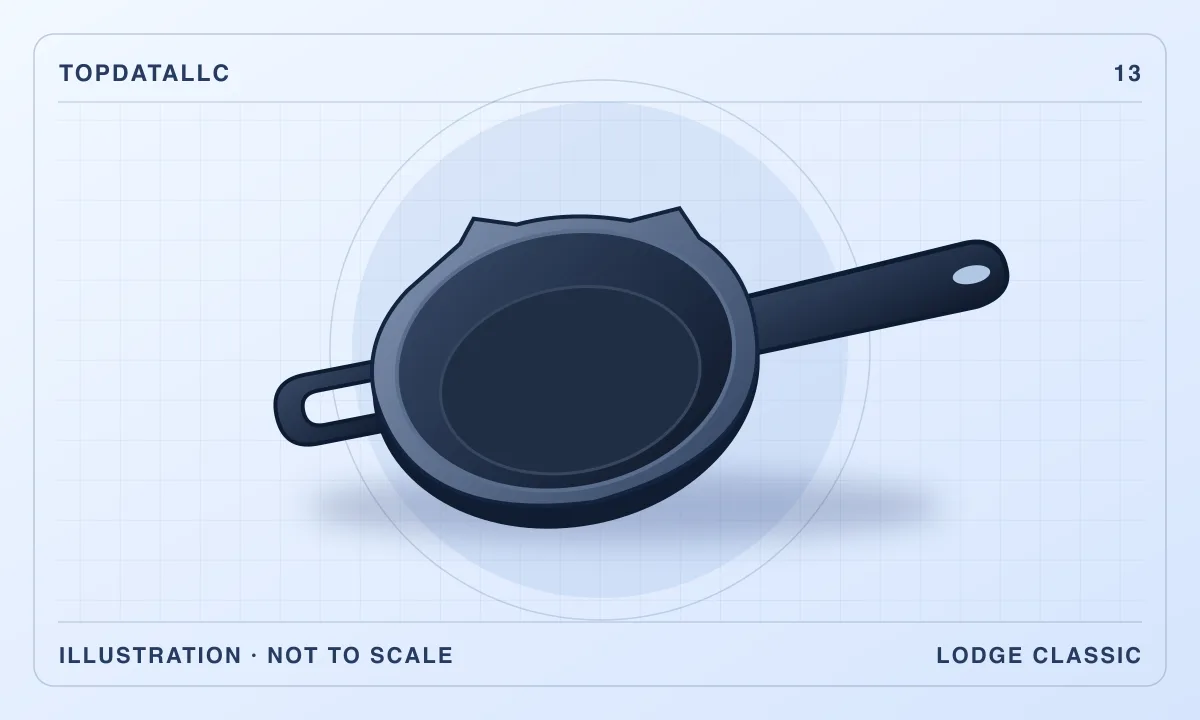
The Lodge Classic 10.25-inch cast iron skillet is worth considering when you want one pan for browning, oven finishing and the occasional baked dish. The broad rim makes it look spacious, but the flat area under the food is smaller. The long handle and short helper handle also need room in the oven and on the stove. Work through those dimensions and the weight before deciding whether it will become a regular pan or stay in the cupboard.
This research-based review covers the classic seasoned L8SK3 shape with a long main handle, a smaller assist handle and pour spouts. Lodge calls the skillet L8SK3 on its product page. Amazon identifies the linked listing as L8SK3PLT. Lodge's model page and care instructions establish the design and upkeep. TechGearLab's cast iron comparison provides independent observations from cooking in the 10.25-inch Lodge. Different Lodge lines and bundles can have different handles, surfaces or included accessories. Match the linked version and its package to the pan discussed here.
Measure the food and the cooking surface
When you compare skillet sizes, start with what has to sit flat. Two portions of meat or several slices of bread can take up more usable width than the number of servings suggests. The Lodge's 10.25 inches is the nominal skillet size. The sides rise from a smaller floor, so the outer width is the wrong measurement for judging the space available for browning. Measure the flat area on the pan you currently use and think about how much of it a usual meal occupies.
For a practical check, cut a paper circle the size of the flat base of a skillet you own. Put paper outlines of your usual portions inside it and leave gaps between them. If you already struggle to spread the food out, find the candidate's internal base dimensions or measure it in person. A larger size could save a second batch. If you mostly cook one or two small portions, a smaller pan can be easier to carry and wash without losing usable space for the job.
The sides are useful when food needs to stay in the skillet as you turn or stir it. They also affect how easily you can get a spatula under a pancake near the rim. If the main job is cooking several broad, flat items at once, a griddle may give you a larger uninterrupted surface with simpler access. If you want to move a dish from the stovetop to the oven without transferring it, the skillet's shape is likely more useful.
Check the stove and the oven as one setup
Lodge lists induction compatibility and stovetop and oven use. Look at the burner you normally use, especially on a compact range. A burner much smaller than the pan's contact area concentrates the heat. Using a better matched burner and allowing time for preheating can be more useful than immediately turning the control to its highest setting. For a glass cooktop, check the appliance manufacturer's cookware guidance and lift the skillet when moving it to avoid dragging it across the surface.
Check the handle clearance on the range with other pans in place. The handle should not extend into a walkway or rest above another active burner. If a compact stove puts the handle in the way wherever you turn it, consider a pan with a different handle layout. A narrow front-to-back position may fit one burner and interfere with the control panel or another pot. Use the manufacturer's overall length when you make this check.
For oven use, account for the assist handle, main handle and the room your hands need around both. Look at the rack with the door open and picture pulling out the skillet while wearing thick mitts. An empty pan that technically fits can still be awkward to maneuver with food inside. Check where you will set the hot pan down. Put a suitable trivet or heatproof landing spot near the stove before cooking so the move is short and direct.
Account for the weight where it matters
Cast iron brings useful mass to jobs where you want the pan to stay hot as food goes in. That mass also follows you to the sink. Compare the empty weight to a familiar loaded pan, then think about lifting it one-handed, turning it to pour and holding it steady while washing. The short assist handle gives you a second grip. Plan to use both hands and suitable protection whenever you move a hot loaded skillet. The cast iron handles heat up along with the rest of the pan.
The pour spouts help give liquid a route out, but pouring still involves tilting a heavy pan. For a delicate sauce or a large amount of hot liquid, ladling into another vessel can be easier than trying to tip the entire skillet. If your normal cooking calls for tossing ingredients by lifting the pan repeatedly, consider lighter cookware. If it mostly sits on the burner while you turn food with a spatula, the extra mass may be less intrusive.
Storage is another weight check. A low, easy-to-reach shelf can work well if it is sturdy enough and the handle does not catch on surrounding cookware. An overhead stack is less appealing when you use the pan several times a week. Consider how you will take it out and put it away without sliding it over a finish you want to protect. A pan that is quick to reach is more likely to be used for the jobs you bought it for.
Set expectations for heat and sticking
The seasoned surface arrives ready for normal use according to Lodge. Seasoning is oil bonded to the iron through heating. It can develop with use and appropriate care. The first meal still depends on heat, fat and timing. Choose something that lets you learn the pan without needing effortless release, such as a dish you already know how to brown. Give the skillet time to warm, use an appropriate cooking fat and adjust the heat as the dish cooks.
TechGearLab found the 10.25-inch Lodge a strong cooking performer in its comparison. That result reflects the meals, heat source and conditions it used. Cast iron's ability to retain heat does not tell you how evenly a particular burner heats the pan. If food browns faster in the center than at the edge, make the next batch smaller or try a better matched burner and a gentler preheat. The pattern on your stove is more useful for planning the next meal than a general claim about the material.
If easy release for eggs or thin fish is the main requirement, compare a pan designed around that job and consider the technique you normally use. A seasoned iron pan can handle a broad set of tasks, but a buyer who wants quick, predictable release with minimal fat may prefer a dedicated coated skillet for those meals. A stainless steel pan can make more sense for frequent acidic pan sauces if you also want a pan you can use without maintaining seasoning.
Make the cleanup routine part of the decision
Lodge's care guidance describes hand washing, prompt drying and a light layer of oil when appropriate. It permits a small amount of mild soap. For stuck food, use a suitable brush or scraper and follow the maker's instructions. Skip soaking and the dishwasher. Take care of the pan once it has cooled sufficiently to handle and avoid a sudden temperature change from a hot pan to cold water.
Have a place for the pan to dry and a way to wipe away excess oil. A heavy layer of oil is unnecessary and can leave a tacky surface. If you see rust or a rough patch that bothers you, consult Lodge's maintenance instructions for the condition rather than stripping the pan by default. Surface changes from ordinary cooking and a problem that needs a full reseasoning call for different levels of work.
For long, wet, acidic cooking, read Lodge's seasoning advice and consider using stainless steel or enameled cookware. Short contact and a long simmer are different situations, especially on a newer or damaged seasoning layer. If most of your meals involve tomato sauces simmered for a long time, the cast iron skillet may be most useful as a second pan for browning and baking instead of the pan you reach for every day.
Choose a lid and utensils for the jobs you will do
The skillet itself and a lid are separate fit decisions. If you already own a lid advertised for a similarly sized pan, check where it actually rests against the rim. The pour spouts and shape can affect the fit. Look for a stable seat and enough clearance for the food. Confirm that a lid and its knob are rated for any oven use you plan. If you mostly sear or bake uncovered, you can judge the pan on its own before adding another item to store.
Try the utensils you use with your current pan. The width and shape of the spatula matter when you need to turn food near a curved side. For a dish with small pieces, a utensil that reaches comfortably into the corners may be more useful than a larger blade. If your favorite spatula has a short handle, consider how close your hand will be to the hot rim. Set up the tools before cooking, especially if you plan to move the pan from stove to oven.
Work out whether it will replace a pan
Think through three meals you cook in an ordinary week. Mark the step where the Lodge would be an improvement in each one. A skillet can take over the browning and oven finish for a meal that currently uses two vessels. It may add work to a quick breakfast if you prefer the way your existing pan releases eggs and washes up. Keeping a lighter pan for those jobs may be a better arrangement than expecting this skillet to replace it.
Pick the shape that suits your routine
Buy the 10.25-inch Classic if the flat area fits your usual portions, your burner matches the base reasonably well and you can move it safely with both handles. It is particularly appealing for someone who likes to brown ingredients on the stove and finish in the oven. If you often cook crowded batches, compare a larger skillet and repeat the burner and weight checks. If a long handle gets in the way, Lodge's dual-handle cast iron design is a specific alternative to measure.
A lighter skillet makes sense if you regularly lift and toss food or if moving a loaded pan is the part you would least enjoy. Enameled cast iron can suit someone who wants the mass with a different cooking surface and care routine. A griddle is worth a look if flat space matters most. Compare the real action you do several times a week rather than buying for a recipe you might try once.
The best final check is to walk one usual meal through your kitchen. Picture the portions in the pan, the burner it will sit on, the hot route to the oven or counter, and the last trip to the sink. If all those steps work, the Lodge's size and traditional handle arrangement are practical reasons to choose it. If one step is awkward before the pan is even loaded, changing size or material is more likely to improve dinner than changing seasoning technique.