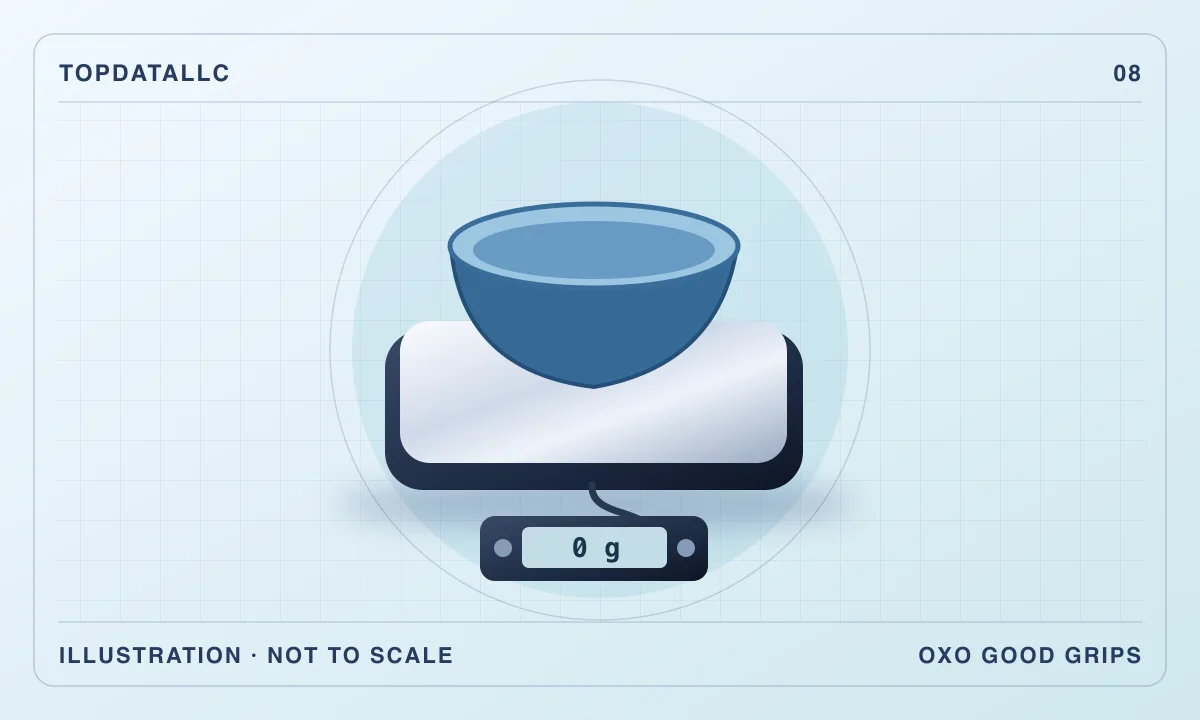
The OXO Good Grips 11 lb stainless-steel food scale earns its place on a shortlist when the bowls you use keep getting in the way of the numbers. Its display pulls away from the body of the scale, so you can place the readout where it is visible while the bowl stays centered. That is a practical advantage if you repeatedly lift a bowl to see the screen or catch yourself pouring ingredients while bending down to check the weight.
This review covers the black US listing with the stainless-steel platform and pull-out display. OXO makes scales with other capacities and configurations. Match those features on the listing and the package before using the advice here. The assessment draws on OXO documentation and independent published observations of the pull-out scale.
See what the bowl actually covers
Take out the largest vessel you expect to use and put it on your counter. Stand where you normally mix. A steep-sided container with a wide base presents a different problem from a bowl with a narrow foot and a broad flared rim. The first needs enough support underneath. The second can sit securely and still hide the digits from above. The OXO design addresses the second problem by moving the screen away from the platform while leaving the load where it belongs.
The feature is most useful when the obstruction is consistent. A shallow dinner plate loaded with chopped vegetables can block the reading every time you weigh a serving. A tall mixer bowl can cast a shadow on a display set near the platform. Pulling the readout forward gives you a different sightline in both cases. The Cooking World reported that the movable screen on the version it reviewed made it easier to see readings around large containers. Treat that observation as evidence about visibility. The improvement will depend on the shape of your bowl and the light where you cook.
A wide vessel still needs room around it. Set the bowl so its base is supported and its sides clear the wall, backsplash and anything else on the counter. A vessel touching another surface can share its load with that surface. The resulting number can change as you move the bowl or add an ingredient. Moving the screen improves your view of the number while the centered, unobstructed bowl gives you a better measurement setup.
Try the pull-out layout before committing
Think about the order in which you use the worktop. If you set the recipe at the back, put a bowl in the middle and work with a cutting board in front, the movable display needs an accessible spot of its own. It will be easier to see if you can bring it forward without putting it under the cutting board or directly in the path of a scoop. If the front of your counter is already crowded, decide what can move before choosing a scale for its screen.
A useful trial is to mark two positions with folded paper. Put one at the front of the area where a scale would sit and another farther toward you. Set an empty bowl behind them and look down as if you were adding an ingredient. Compare how readily you can see each marker, reach it and work around it. The paper is a sightline check. Consult the product dimensions for the actual space required by the scale and leave room to remove the bowl without brushing the display.
Keep the screen seated when you use a cup or a small bowl that leaves the digits clear. That gives you a simpler layout and leaves less to wipe down. Reserve the extended position for vessels that obscure the readout. If your work surface is so shallow that the scale or bowl sits against the edge, a different work location or a smaller vessel is a better first fix.
Weigh into a bowl without losing the recipe
OXO describes a zero function for subtracting the container from the reading. Begin on a hard, level counter. Set the empty bowl on the platform, let the display settle and press zero. Add the first ingredient and approach the final amount gradually. Once you have the desired reading, press zero again before adding the next ingredient. When each ingredient goes into the same bowl, this saves dishes and keeps the visible number focused on the ingredient you are adding.
The easiest mistake in this workflow is forgetting where you are. The display shows the amount since the last reset, and a recipe might call for several similar amounts in a row. Turn the recipe so it is visible beside the display and check off each ingredient before zeroing. Keep ingredients on one side until they have been added, then move the packages to the other side. This is especially useful with flour, sugar and ground ingredients that become difficult to distinguish once combined.
Weigh ingredients separately when reversing a mistake would be difficult. A small bowl or piece of parchment lets you correct an overshoot before an ingredient reaches the mix. That matters more with fine powders and seasonings than with a bowl of separate whole fruit. Likewise, if a recipe asks for one ingredient to be divided between dough and topping, put the second portion aside first so it remains available when you need it.
If you lift the bowl after using zero and see a negative value, the scale is accounting for the weight you asked it to subtract. Put the bowl back before continuing that measurement. If you are switching vessels or beginning a fresh measurement, set up the new load and zero again as appropriate. OXO explains this behavior in its use guide. The movable display can make the button and digits easier to reach during those steps.
Count the container toward the 11 lb capacity
Tare changes the reading. The platform still carries the bowl and everything in it. For example, a mixing bowl that weighs three pounds leaves about eight pounds for the ingredients on a scale rated for eleven pounds total. If you press zero between ingredients, keep track of the growing load. A scale reading zero after the latest reset can already have much of its capacity in use.
The size of your usual batches matters more than how many servings a product listing mentions. Weigh an empty bowl on your current scale if it has room. Add up the main recipe weights using the same unit and compare the total with the OXO limit. If your total regularly approaches the rating, a lighter bowl or a larger-capacity scale can make the process simpler. Splitting a batch into separate containers works when the recipe allows ingredients to be divided reliably.
There is also a difference between total capacity and the usefulness of a reading at the low end. A scale designed for everyday baking and portions can display sensible weights for a bowl of flour and still offer too little resolution for very small quantities. Compare the increment stated for the exact package with the smallest amount your recipe expects you to measure. A recipe written in tenths of a gram is a good reason to check the specifications of a separate precision scale. Check that the smaller scale can support the vessel you intend to use, too.
Choose your units before you start pouring
The OXO family documentation covers metric and US customary modes. Read the unit indicator when you switch on the scale, especially if someone else used it last. Match the mode to the recipe before putting an ingredient in the bowl. A number on the screen is only helpful if you know whether it represents ounces, grams or a combined display format. Using one consistent unit for a recipe also makes it easier to plan total capacity.
Check the unit display on the version you are ordering if you frequently use recipes expressed in decimal ounces. The Cooking World reported fractional display behavior on the version it covered. Screen layout can differ across models, so use the exact package information or a demonstration for the version you receive. If you already work mainly in grams, that is a useful reason to choose metric mode and stay there through the recipe.
Give the display time to settle when you add the last bit of an ingredient. The independent review reported a delay in registering added weight on its unit. That suggests a simple habit for close measurements. Pause near your target before adding more. Spoon in the last portion and confirm the reading before pressing zero. The review does not establish a measured settling time or accuracy for every unit.
Plan for spills and storage
A removable platform is useful if flour, cocoa or oil tends to reach the weighing surface. OXO's booklet for the stainless pull-out model describes removing the platform for cleaning and keeping both platform and base out of the dishwasher. Follow the care instructions supplied with your unit. Clean the weighing surface separately as directed, let parts dry, and check that the platform is seated properly before the next use.
Wipe up loose ingredients before they migrate into the display area. Move the bowl away first so you can see both the platform and the gap around the pull-out section. If you bake often with sticky ingredients, keeping the display seated until the bowl needs the extra clearance can simplify cleanup. The separate screen is another surface and another seam to keep clear.
For drawer storage, check the space with the display fully seated and the platform fitted. Measure the narrowest part of the drawer opening and leave room to lift the scale out. OXO advises against storing heavy objects on top of the scale. A dedicated spot beside the utensils is better than placing it beneath a stack of pans. If the drawer must also hold tall tools, check whether they swing or slide over the scale as the drawer closes.
Decide what you want to improve
Choose the OXO if your regular bowls and plates keep blocking the digits and the counter has enough space for a pulled-out display. It makes particular sense when you weigh directly into the serving dish or mixing bowl and want to keep it in place through several resets. The removable platform is another practical feature if you clean up flour or crumbs after most uses.
Consider a compact model such as the Etekcity EK6015 if you generally weigh into smaller containers and want an easy fit in a shallow drawer. A separate fine-resolution scale is the more relevant comparison when a recipe depends on tiny amounts. For large batches, start with the combined weight of the bowl and ingredients and look for sufficient capacity before comparing screen designs. If you already own a scale that reads reliably, try a lighter container with a narrower rim before replacing it. That may solve the obstruction at the cost of transferring ingredients to a second bowl.
The most useful deciding test is to set out your usual vessel, readout position and recipe together. You should be able to see the number while standing where you add ingredients, reach the zero button without shifting the bowl and move the bowl away easily when finished. If those three actions are awkward because of the screen position, the OXO's movable display addresses the friction you experience in your own kitchen.