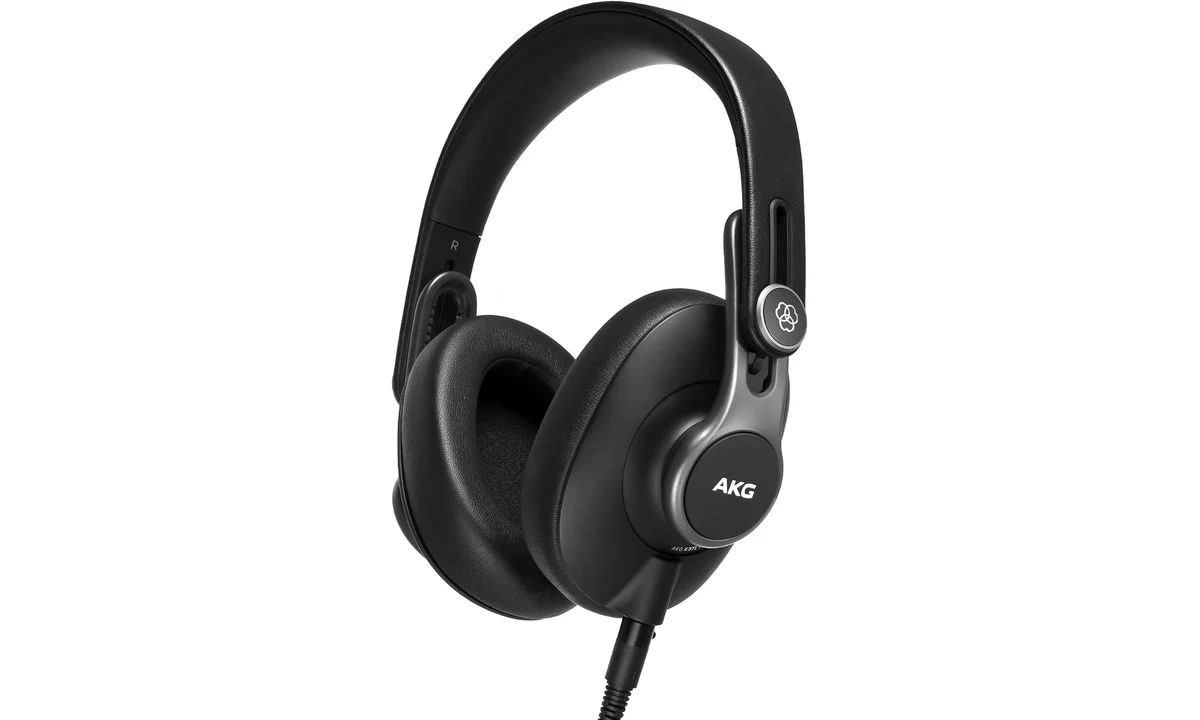
The AKG K371 is worth considering when you want a wired, closed headphone that can fold into a work bag and handle ordinary listening as well as creative tasks. It combines a relatively restrained shape with several included cables, rather than adding wireless modes or a control app. Its central compromise is that closed earcups do not automatically mean strong isolation.
This is a research-based assessment of the original wired K371 in black, using AKG’s published specification and SoundGuys’ independent review. It is not the K371-BT. If you need Bluetooth, a microphone or active noise cancellation, begin with a product that actually provides those features instead of expecting the wired model to acquire them through a different cable.
The case for a portable working headphone
A headphone used for content work often needs to move between tasks rather than excel at a single glamorous demonstration. You might edit speech at a computer, monitor a recording through an interface and listen to music away from the desk. The K371’s folding construction and removable lead make it relevant to that mixed routine.
That does not make it an all-purpose headset. The standard arrangement is passive analog playback, with no built-in voice microphone. Calls require a separate input, and a device lacking a headphone socket requires a suitable audio output adapter. Those requirements should enter the comparison before you judge the headphone on appearance or a studio description.
The most useful buying question is whether its particular combination of fit, cable flexibility and sound suits your routine. If your main problem is a loud train or constant movement during calls, the K371’s features address the wrong priorities. If your main problem is an awkward fixed lead on an otherwise useful wired headphone, the design deserves a closer look.
Establish the exact model and package
AKG identifies the wired K371 as an over-ear, closed-back, foldable headphone with oval earcups. The published specification lists 50-millimeter drivers, 32-ohm impedance and a mass of 255 grams. It describes a detachable cable connection, with multiple leads and a protective pouch in the box.
Those details apply to the original wired model. A retailer may present the Bluetooth version nearby or offer a bundle with additional accessories. Check the product title, selected option and package description together. Similar model names should not be treated as evidence that construction, connection or controls are identical.
Be particularly clear about what the included adapter does. It provides a physical connection between common headphone plug sizes. It is not a microphone adapter, a wireless receiver or a digital audio interface. If a computer or mobile device supplies only a digital port, you need equipment that converts audio appropriately, not merely something that makes a plug appear to fit.
The three-cable package has a practical purpose
The official package lists a short 1.2-meter straight cable, a 3-meter straight cable and a 3-meter coiled cable. That gives you different ways to connect the same headphones without leaving excess lead in every arrangement. It is a meaningful distinction from a headphone whose long cable is permanently attached.
A shorter straight lead can keep a laptop setup tidier. A longer lead can reach an interface or other equipment positioned farther away. The coiled option manages slack differently, though it also changes how the cable pulls when you move. The sensible choice is the cable that stays out of your keyboard, chair and work surface while allowing normal movement.
SoundGuys describes a locking mini-XLR connection at the headphone end. A generic cable with the right plug for your computer is therefore not automatically a replacement. Check the headphone-side connector and compatibility before buying a spare. It is better to identify the correct part while the original works than to discover the difference during an interrupted recording session.
Comfort and seal deserve to be assessed together
SoundGuys found the K371 comfortable, including with glasses, and appreciated the cushions and earcup movement. Its reviewer also found isolation only moderate and noted sound leakage. Those observations explain why comfortable fit and strong containment should not be assumed to arrive as a single package.
A headphone can feel pleasant because it avoids pressing hard around the jaw, yet still admit more room sound than you expected. Conversely, changing fit to improve the seal may change pressure. Evaluate the actual compromise on your head, with your normal glasses or hairstyle, instead of inferring it from a photograph of thick cushions.
For longer sessions, try ordinary movements: looking toward a second screen, leaning forward to edit and turning to equipment beside you. Check whether the adjustment remains stable and whether the cable pulls the left side. Comfort while sitting motionless for a short audition is helpful, but it does not answer every question about a working afternoon.
Understanding the reference-response claim
AKG markets the K371 around its Reference Response acoustic target. That is a description of an intended listening balance, not a certificate that every recording or wearer will hear perfect neutrality. Ear shape, pad placement, seal and individual preferences still affect the result.
SoundGuys’ listening and measurement assessment was broadly positive about the tuning, while preserving the practical limitations around isolation and leakage. The useful conclusion is that the K371 deserves consideration as a versatile wired listening tool. It is not evidence that it eliminates the need to learn a monitoring reference or compare finished work elsewhere.
The manufacturer’s published bandwidth extends beyond ordinary hearing, but that range should not decide the purchase. A frequency-range endpoint says little about the relative level of vocals, bass and treble within the music you hear. For a buyer, familiar material and consistent fit provide a more useful starting point than choosing the largest numbers on a specification table.
How to judge it for speech and music work
For spoken-word editing, listen for whether you can follow changes in vocal level and notice distracting background sounds without repeatedly altering playback volume. Use recordings you know well. A headphone that makes every sample sound immediately impressive is not necessarily the most useful tool for deciding what needs editing.
For music, separate preference from production judgment. You may enjoy a particular balance and still want another playback reference before committing to tonal changes. Avoid assuming that a label such as professional makes it safe to adjust every recording until it sounds ideal on this one headphone.
If your work includes live recording, make a short test with the microphone positioned as it will be used. Check the recording for playback spill at your intended headphone level. SoundGuys’ isolation caveat is a reason to test this arrangement, not to presume that every closed headphone will keep a sensitive microphone completely unaware of what you are hearing.
Folding helps with storage, but inspect the hinges
The K371’s articulated earcups and folding design reduce the space needed when packing. SoundGuys describes a predominantly plastic exterior with reinforced elements. That can make the headphone easier to carry without making it immune to damage in a busy bag. Fold it deliberately, following the intended movement rather than forcing a joint past resistance.
The supplied pouch is useful for keeping the headphones and small accessories together. It is not a rigid shell capable of protecting the hinges from a heavy object pressing against them. If you regularly carry a laptop, charger and other equipment in the same compartment, plan a protected space or consider a compatible case.
At a permanent desk, the folding feature may matter less than how quickly you can put the headphones on and take them off. A stable storage spot also avoids leaving the cable hanging across a chair or work surface. Portability should be judged as the whole routine of carrying, setting up and packing away, not just the folded dimensions in a promotional image.
What a closed design does not solve
The K371 has no active cancellation system. Low, continuous environmental sounds and nearby conversation can remain distracting even when the cups surround your ears. Raising playback level to overpower them is not a substitute for choosing a design suited to the environment. If isolation is the main requirement, compare products specifically on that basis.
It is also not intended as a sweat-resistant exercise headset. The cable, over-ear form and absence of an exercise-specific fit system make a different category more sensible for running or gym use. A light published weight alone does not establish stability during movement or resistance to moisture.
For calls, remember that microphone quality is determined by the input device you choose. Plugging the K371 into a computer may leave its internal microphone selected. Check both sides of the call setup before a meeting, especially if you move between a laptop and a dock. Our workspace microphone guides can help with that separate decision.
Useful alternatives and the reason to compare them
The Audio-Technica ATH-M50x is a relevant alternative for a buyer who also values folding construction and cable options. The comparison should include pad shape, cable connection and actual comfort, not just the number of supplied accessories. Similar feature lists do not make two headphones fit the same way.
The classic beyerdynamic DT 770 PRO offers a different set of compromises, with its familiar velour cushions and fixed lead. It deserves consideration for a stable recording desk, but the permanently attached cable may be less convenient when you routinely change source locations. Decide how much that distinction matters before trying to rank either product’s reputation.
An open headphone such as the Sennheiser HD 560S takes another route. In a quiet personal room, its open construction may suit the listening arrangement you want. Around other people or a live microphone, that openness can create a different problem. Choose the type of listening space first; a direct feature-count comparison misses the reason those designs differ.
Replacement parts and the complete cost
Removable cables and replaceable cushions can make ownership more practical, but verify current parts availability and the exact fit. SoundGuys identifies replaceable pads as a benefit. That does not mean every pad advertised for a similar AKG model preserves the original shape, seal or listening balance.
If you change cushions, reassess familiar material before relying on previous tonal judgments. A different fit can be mistaken for a change in the source or recording. Keep track of the parts you use if consistency matters for ongoing work, and consult appropriate service guidance for anything beyond straightforward replacement accessories.
The purchase calculation should also include a necessary output adapter, any separate microphone and protection for transport. A headphone that appears inexpensive on its own can become a less suitable option if it requires several extra devices to meet your actual needs. Conversely, existing compatible equipment may make the wired K371 a simpler addition than a feature-rich replacement system.
Our recommendation
Consider the wired K371 if you want a foldable closed headphone for mixed listening and creative tasks, value the supplied cable choices, and can check its fit in your normal working conditions. Independent evidence supports its comfort and general sound appeal, with the important warning that isolation and leakage are less impressive than the closed shape might suggest.
Choose another category if you need strong active cancellation, cordless movement or a microphone integrated into the headphone. Verify the exact wired model, selected finish, accessories, seller and return arrangements before ordering. The K371 is a sensible tool when its practical balance matches the job; it should not be bought as a promise that one headphone can satisfy every listening environment.