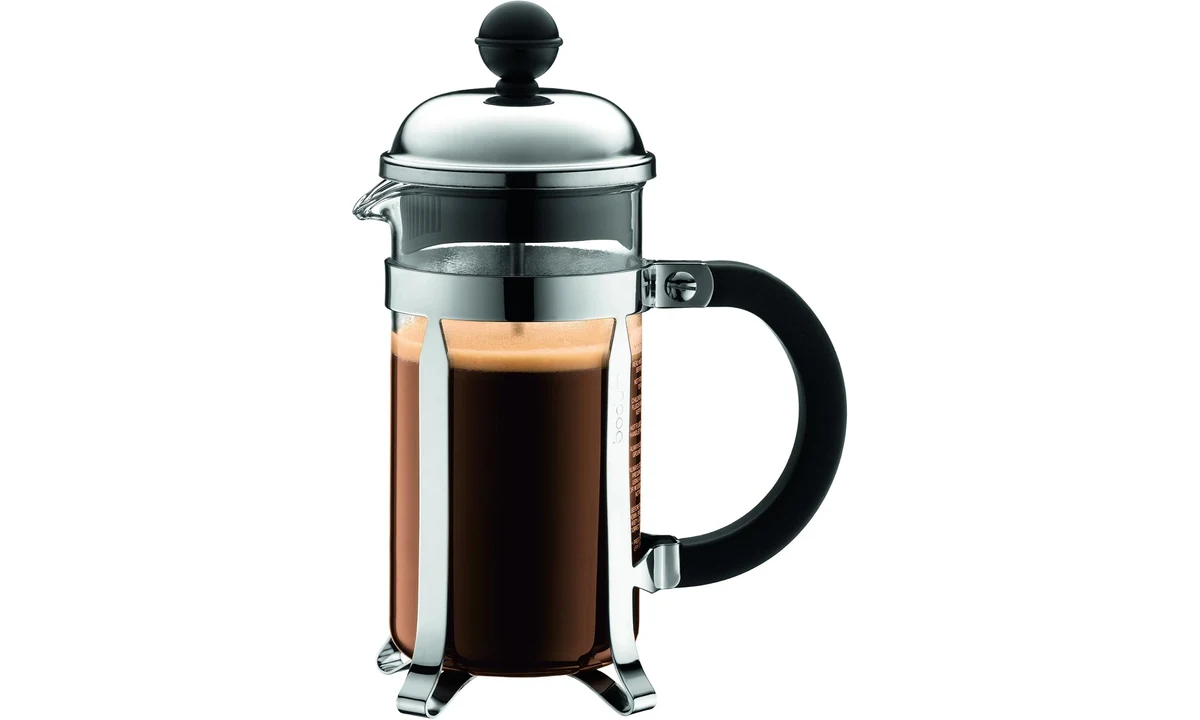
The Bodum Chambord 12oz is a French press for one modest cup, not a small machine that somehow produces several full mugs. Its appeal is a straightforward immersion brew, a reusable metal filter and a traditional glass-and-metal design. The most important purchase check is capacity. If you routinely fill a large travel mug, the larger Chambord sizes or another brewing method may fit your morning better.
This review concerns the 0.35-litre model in the polished metal frame. Bodum calls it a three-cup size, using small coffee cups rather than typical mugs as the reference. The analysis uses Bodum’s catalogue and instructions, plus an independent Homes & Gardens review of a larger Chambord for family context. We have not brewed with the selected model, and the larger review is not a test of this exact capacity.
Understand the usable cup before ordering
The nominal 12oz capacity is not the amount of finished coffee you can assume will reach a mug. Grounds occupy space, the instructions require headroom, and some liquid remains with the grounds. These practical allowances matter more in a small press because they represent a meaningful part of the total. Start with the drinking vessel you want to fill and assess whether this size leaves enough room for a sensible brew.
The three-cup label is particularly easy to misread. It does not mean three people each receive a normal large mug. For a solo drinker who enjoys a modest serving, the size can avoid preparing more than needed. For a couple sharing breakfast, it can mean repeating the entire brewing and cleaning routine. Decide which situation resembles your household before being drawn to the compact appearance.
A small brewer can also be useful alongside another method. Someone who usually makes filtered coffee for several people may want an occasional single serving with a different texture. That is a more realistic role than treating the smallest Chambord as a universal replacement for every coffee maker. Its convenience depends on the amount you actually want, not the largest number implied by a catalogue cup count.
Glass, frame and reusable filter
Bodum describes a borosilicate-glass vessel held in a polished metal frame, with a handle, lid and metal mesh filter assembly. The glass lets you see the brew, while the frame supplies the familiar Chambord shape. It is still glass equipment requiring careful handling. A metal surround does not make the beaker unbreakable or suitable for every kitchen heating method.
The filter is reusable, so you do not need a fresh paper filter for each brew. That changes both the texture of the coffee and the cleanup. Some fine material and oils can remain in a metal-filtered drink rather than being captured as they would by an appropriate paper filter. A fuller or more textured cup can be desirable, but it is a preference, not proof that the method extracts a universally better drink.
Inspect the beaker and filter components during routine cleaning. A damaged glass vessel is not something to keep using because the frame still holds it. Confirm replacement parts against the exact size and model rather than assuming every Chambord insert fits. The possibility of separate parts is useful only when the component you need is compatible and available through an appropriate source.
The press does not contain an electric heater or a documented insulated double-wall system. If you habitually leave brewed coffee in the vessel while attending to other tasks, consider the resulting routine rather than expecting the equipment to maintain a serving temperature automatically. A smaller serving prepared when you are ready to drink may be a better fit for the design.
Brewing control starts outside the press
The Chambord does not grind coffee, heat water or measure ingredients. You need a suitable grinder or appropriately ground coffee, a way to heat water and a means of keeping the process consistent. Include those items in the buying decision. A simple brewer can still be part of a substantial setup if you currently own none of the supporting equipment.
Bodum’s instructions call for a coarse grind. The useful reason to pay attention is the relationship between the coffee particles and the filter, not a desire to make the process elaborate. An unsuitable fine grind can complicate pressing and leave more material in the cup. Buying coffee prepared for another method may undermine the very convenience that drew you to a French press.
A scale can help you repeat proportions rather than guessing by the appearance of a scoop. This is especially useful with a small brewer, where a modest change in the amount of coffee represents a noticeable part of the batch. You do not need to chase an elaborate recipe immediately. Begin with the maker’s guidance, make one change at a time and note what produces the drink you prefer.
Water and coffee choice influence the result as well as the vessel. Avoid blaming the press for every bitter or weak cup before considering grind, freshness, proportions and the brewing routine. Equally, do not expect an expensive grinder to fix an inconvenient capacity. The brewer’s physical size remains a fixed purchasing decision even when the recipe is adjustable.
Headroom and gentle pressing matter
Follow Bodum’s directions for hot rather than boiling water, appropriate headroom and stirring with a suitable nonmetal utensil. The instructions specify leaving approximately an inch, or 2.5cm, below the top. That is another reason not to equate the nominal vessel capacity with a completely full serving. The working space is part of the process, not unused space to reclaim.
The plunger should be operated gently. Do not force it when resistance is abnormal. Stop and follow the manufacturer’s guidance rather than treating more pressure as a way to improve extraction. A French press is not an espresso machine, and the plunger is a filtering mechanism rather than a reason to compress coffee aggressively. Generic retail instructions mentioning tamping or espresso should not override the actual brewer instructions.
Keep the press on an appropriate stable surface and maintain control of the hot vessel. Small size can make equipment look harmless, but the contents are still hot. Leave enough working space to pour without reaching around clutter. The same care is relevant in a shared kitchen where a compact glass brewer might otherwise be overlooked beside a kettle or dish rack.
Do not put the glass press directly on a hob. It is a brewing vessel used according to the manufacturer’s method, not a saucepan for heating the water. Separating water heating from brewing may involve another item on the counter, but it is a fundamental part of choosing this type of equipment. If you want an appliance that manages heating internally, compare another category of brewer.
Texture and timing expectations
A metal-filtered cup often suits drinkers who like a more substantial texture. Someone who prefers a particularly clear paper-filtered drink may find the fine material undesirable. That preference should guide the purchase more than claims that one method is inherently more authentic. The Chambord’s filter is part of its character, and attempting to make it behave exactly like another brewing method can miss the reason to choose it.
Once the coffee is brewed, plan how you will serve it rather than leaving the whole routine unfinished while other breakfast tasks compete for attention. A manual brewer asks you to manage the sequence. That can be pleasant when you enjoy the process and inconvenient when you need a completely automatic drink while getting ready for work. Neither preference makes the other method inferior.
Homes & Gardens’ review provides observations about a larger Chambord, including the experience of using the family’s traditional design. It does not establish identical heat behavior, handling or finished volume for the small version here. We use it as context, not as a source of precise results assigned to this model. Capacity-specific claims deserve capacity-specific evidence.
Cleanup is the recurring cost
A reusable filter removes the need to dispose of a paper filter, but the grounds and filter assembly still need cleaning. Plan a suitable way to remove grounds and follow the care instructions for the exact finish and components. Do not assume that every part of every Chambord variant has identical dishwasher guidance. The frame, glass and filter are separate considerations.
Disassemble and clean the filter as directed so old coffee residue does not accumulate between components. Rinsing a visibly clear beaker is not necessarily the same as cleaning the filter assembly. A small press can be quick to handle, but only if you are comfortable doing this routinely. Someone who dislikes wet grounds and small filter parts may prefer another method despite the reusable-filter appeal.
Dry and store the components sensibly, with the glass protected from knocks. Avoid placing heavy cookware against the beaker in a crowded cupboard or sink. If the press must share a busy dishwashing area, consider whether you have a place for it while it waits to be cleaned. Practical storage often determines how long a delicate-looking brewer remains convenient to use.
Comparing other compact coffee methods
The Hario V60 already covered on TopDataLLC is a relevant alternative for someone who prefers paper filtration and is willing to manage a pouring technique. It has a different workflow and consumable requirement. Do not assume one method is faster or tastier for everyone; compare the texture you want and the routine you are prepared to repeat on a rushed morning.
The AeroPress Original is another compact manual option already covered on the site. Its brewing and filtering arrangement is different, and it introduces its own capacity and accessory considerations. It is worth comparing when portability and a different cleanup routine matter more than seeing the coffee steep inside a traditional glass press. Choose according to the complete workflow rather than collecting brewers with overlapping roles.
A larger Chambord is the simplest alternative if you like the method but need more finished coffee. That avoids asking the small model to do repeated batches every day. A different Bodum family or frame material may alter appearance and handling, but it should not be assumed to produce superior flavour merely because it costs more. Capacity and care requirements remain the more useful comparison points.
Keep the size choice deliberate
Check the capacity on the package before the first brew. The same familiar frame appears across several sizes, so appearance alone is not a reliable confirmation.
Verdict for a small serving
Choose the Chambord 12oz when you want one modest serving, enjoy a manual immersion routine and prefer the texture of a reusable metal filter. Its transparent vessel and familiar controls make the method understandable, but you still supply the grind, hot water, proportions and attention. Buy the selected small size intentionally, with realistic allowance for grounds and headroom.
Skip it for several mugs at once, automatic heating or an expectation of paper-filter clarity without changing the method. Our verdict is a qualified recommendation for the right serving size and cleanup preference. The Chambord’s appeal is a direct, repeatable brewing process in a compact traditional design. It works best when that process suits your morning, rather than when the small cup-count label is mistaken for a larger household capacity.