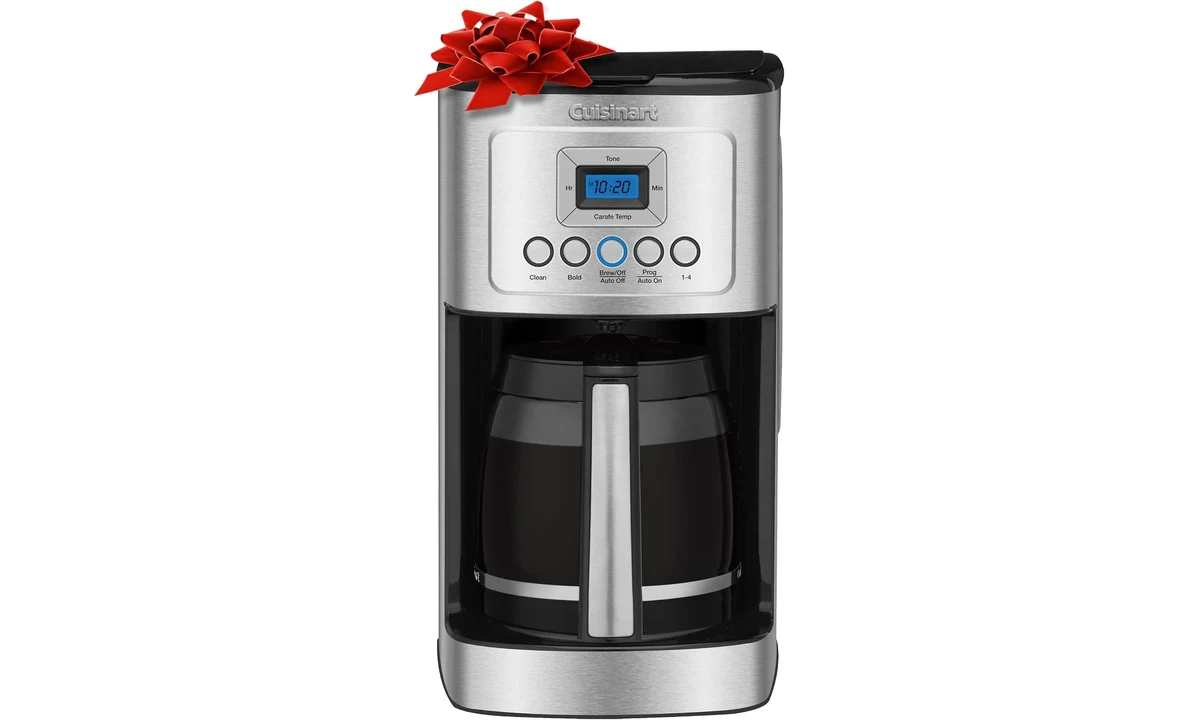
The Cuisinart DCC-3200 makes sense for a household that wants a pot of filter coffee started to a schedule and kept warm in a glass carafe. Its programming, Regular or Bold choice and small-batch option are useful everyday controls. The buying decision is less about the fourteen-cup headline than about whether you want a shared pot on a warming plate rather than a thermal carafe or a freshly prepared single mug.
This review concerns the stainless US DCC-3200 retail family, using Cuisinart’s current DCC-3200NAS information and the manufacturer-linked DCC-3200-series manual. Tom’s Guide’s editorial selection adds capacity and placement context; it is not treated as an exact-unit brewing-temperature test. We have not brewed coffee with this machine ourselves. Match the current package and supplied instructions rather than assuming every similar Cuisinart brewer has the same controls.
Fourteen coffee cups are not fourteen large mugs
Start with the amount of coffee the household actually drinks together. Coffee-machine cup labels use the maker’s serving measure, which differs from a large breakfast mug or travel vessel. A fourteen-cup description can sound extravagant while still serving a much smaller number of generously filled mugs. Work backward from your actual cups instead of buying around the largest number printed beside the product name.
The DCC-3200 is intended to brew into its supplied carafe. That suits a shared breakfast, several people filling cups together or someone returning for another serving. A person who wants one fresh drink each time is making a different demand. The existence of a small-batch setting is useful, but it does not turn the brewer into a pod machine dispensing a chosen mug from a large stored water supply.
Cuisinart’s manual tells you to add the desired water, subject to the reservoir’s limits. The small-batch control changes the brewing process for a smaller quantity; it does not measure out a small serving after you have filled the tank for a large pot. Understanding that distinction prevents the controls from looking more automatic than the physical setup actually is.
The carafe markings can help establish a repeatable household amount, provided you follow the supplied instructions and assess the cups you use. Keep that routine clear when several people prepare the machine. If one person measures for modest servings and another expects large mugs, the disagreement is about serving assumptions rather than necessarily a fault in the brewer.
Programming earns its place through a regular morning
The DCC-3200 can be set to begin brewing at a selected time, with programming up to a day ahead. That is the main difference from the manually started OXO Brew 8-Cup reviewed elsewhere on TopDataLLC. If mornings follow a predictable schedule, setting up the machine beforehand can be useful. If you wake at different times and prefer to prepare ingredients immediately before brewing, the advantage is smaller.
Programming still depends on the ordinary preparation being complete. Water, coffee, filter arrangement and correctly placed carafe need attention before the machine starts. A timer does not check whether someone emptied the tank, removed the carafe or changed the clock. Make those checks part of setup rather than treating an illuminated time display as proof that tomorrow’s coffee is ready to happen.
The ready tone can be turned off, which is useful when one person prepares coffee before the rest of the household wakes. It changes the audible alert rather than the brewing schedule or the need to check the machine.
Learn the difference between setting a time and activating the automatic-start function. The manual describes the relevant button and indicator states. That distinction matters because a stored time can exist without the brewer being set to use it. Check the actual indicator during a calm first setup instead of learning the controls during a rushed morning when an inactive schedule is easily mistaken for a broken machine.
Power interruptions are another reason to confirm the clock and program state when something has changed at home. The product includes a limited reset-memory feature, but that should not become a promise that every outage leaves the schedule intact. Use the manual’s conditions, and recheck after an interruption rather than relying on a remembered setting whose current status you have not inspected.
Regular, Bold and small-batch controls solve different questions
Regular and Bold are brew choices. They do not change the coffee beans into a different roast or make an unsuitable grind behave as though it were correct. Begin with the manufacturer’s recommended preparation and a familiar coffee, then compare the resulting drink. A bolder program is most useful when it addresses your preferred flavor within a sensible recipe, rather than being selected automatically as the supposedly premium option.
The small-batch setting is intended to adapt the brew process when preparing less than a full carafe. Use it within the documented range and with the right amount of water and grounds. It is a different control from brew strength. Treating the buttons as separate decisions makes the machine easier to understand: how much you are brewing and which supported flavor arrangement you prefer.
The manual also sets a maximum amount of ground coffee. That is worth reading before trying to compensate for weak flavor by filling the basket further and further. Overflow and unsuitable grinding are different problems from choosing a stronger recipe. Follow the limit, and investigate the coffee, grind, water and serving expectations in a controlled way rather than treating more grounds as the answer to every disappointing pot.
A grinder remains a separate part of the setup. This machine does not grind beans simply because Cuisinart sells other brewers that do. If you already have an OXO grinder or Fellow Ode, use an appropriate grind for this brewing method and establish a repeatable amount. A useful brewer can still make coffee you dislike when the preparation changes unpredictably from one pot to the next.
Glass and a warming plate are a deliberate serving arrangement
The glass carafe makes the remaining coffee visible and sits on a warming plate with adjustable settings. That suits a household that prefers seeing the pot and serving from it while it remains beside the brewer. It differs from a thermal carafe that holds heat without a powered plate. Neither method automatically settles how long a particular person enjoys the taste of coffee after brewing.
The carafe-temperature control adjusts the warming arrangement. It should not be confused with an independent manual brew-water temperature setting or a measurement of the liquid in your cup. Choose the supported setting that suits the household’s serving routine. We do not provide a measured retention interval or a promise that the coffee tastes unchanged throughout a long morning.
Cuisinart allows an adjustable automatic-off period within the documented range. Select it deliberately instead of assuming the default fits every household. A shared pot consumed promptly makes a different demand from a pot revisited gradually. The control is useful because you can align the serving window with your habits, but it does not eliminate the need to handle hot coffee and the plate appropriately.
If you mainly want to take a filled vessel elsewhere, compare whether a thermal brewer or a separate suitable serving arrangement is more convenient. The DCC-3200’s strongest serving role keeps the carafe near its base. Moving a glass carafe away from a hot plate is not the same insulation strategy as buying a thermal carafe, even if both vessels look like ordinary coffee pots in a small photograph.
The filter choices affect the cup and the cleanup
The supplied gold-tone filter can reduce dependence on paper filters, while the manual also describes an appropriate paper option. Follow the specified basket arrangement rather than stacking filter types casually. The permanent filter and paper are different approaches to retaining grounds, and the maker notes that fine particles can pass through the reusable filter into the carafe.
That can affect the cleanup and the sort of cup you prefer. Someone who wants less fine sediment may make a different filter choice from someone prioritizing reusable equipment. Assess the result with the grind and coffee you normally use. A filter choice should answer a preference, not become a universal claim that one arrangement produces better flavor for every drinker.
The charcoal water filter is a separate component in the water path. It is not a substitute for washing the coffee-contact parts or removing mineral buildup. Keep the different jobs distinct: holding coffee grounds, treating the incoming water as documented and cleaning the machine each need attention. Buying a brewer with several filters does not turn maintenance into one interchangeable task.
Plan where wet grounds and the washed basket will go during an ordinary morning. A full shared pot can be convenient while still creating a small daily cleanup job. If the aim is almost no contact with loose coffee, compare that preference honestly with another brewing format. The DCC-3200’s programming reduces when you need to press a button, rather than removing the handling of ingredients and used grounds.
Brew Pause is a short interruption, not a second brewing mode
The brewer includes a pause arrangement for briefly removing the carafe during brewing. Follow the manual’s time limit and replace the carafe promptly. This feature is intended for a short serving interruption, not for leaving the coffee path without its proper vessel while the machine continues its cycle. A familiar convenience name should not override the actual operating instructions.
A cup poured before the complete batch has mixed can also differ from the finished pot. The manufacturer’s preparation guidance should remain the starting point if you want repeatable results. If you regularly need coffee sooner than a programmed batch is ready, adjusting the preparation schedule or choosing another serving method may be more useful than relying on an interruption every morning.
Use the correct replacement carafe if the original is damaged. A similar-looking pot with a compatible-looking height is not necessarily the right match for the pause mechanism, lid and warming plate. Exact-model parts support matters for a brewer intended to stay in use. Check current availability rather than assuming that every Cuisinart glass vessel fits every machine in the range.
Counter access and cleaning before purchase
The brewer needs room for filling through the top, accessing the filter and removing the carafe. A body that fits beneath a cabinet can still be inconvenient if you must drag it forward for every refill. Tom’s Guide’s selection guidance emphasizes filling clearance for this category. Measure the working position and consider where a full water vessel can be poured comfortably, rather than judging only the closed front view.
Cleaning has both daily and periodic parts. Wash the relevant removable components as instructed, and follow the separate descaling routine when required. The manual distinguishes the charcoal filter from the parts involved in that process. A Clean indicator is a prompt to perform the documented work; it does not mean the machine has already cleaned itself or that old coffee oils in a basket no longer matter.
Choose the DCC-3200 when a programmable shared pot, glass serving vessel and adjustable warming arrangement suit the household. Choose a thermal brewer for a different heat-holding preference, a smaller method for occasional single cups or a grinder-equipped model only when you actually want that extra machinery. Its value lies in making a regular batch routine predictable, with capacity, preparation and maintenance understood before the timer is set.