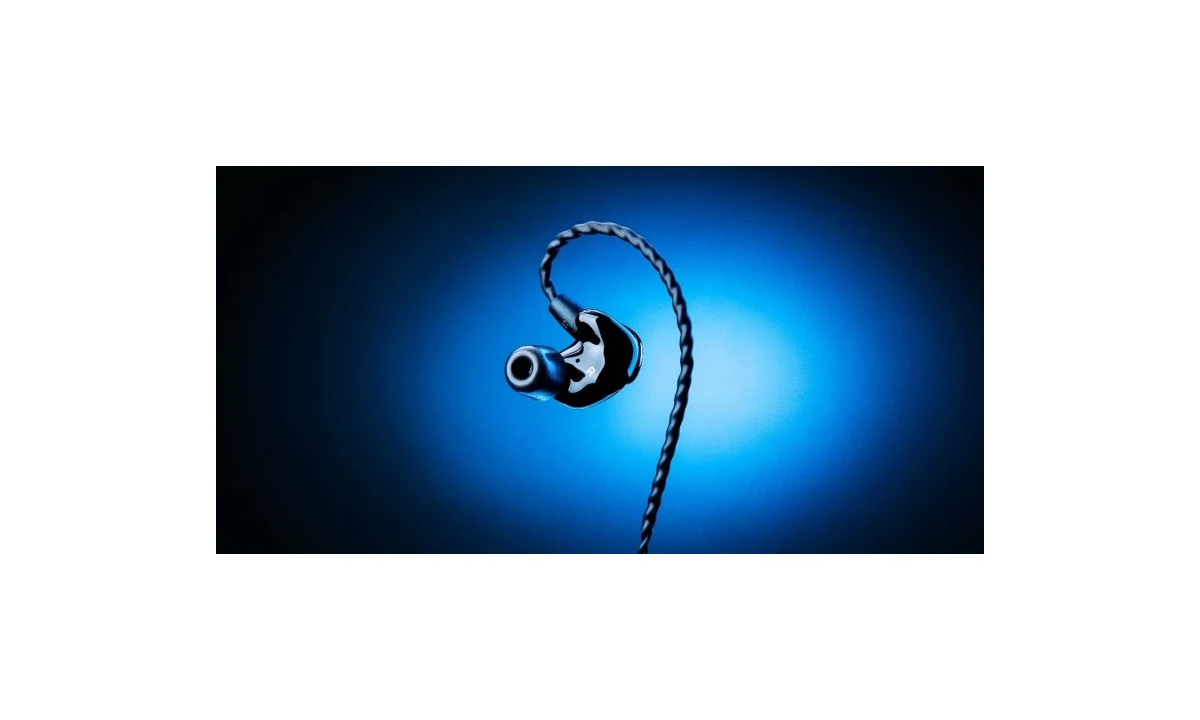
The Razer Moray is a wired in-ear monitor for someone who wants to listen during a stream without wearing a full headset. It has no microphone, no wireless pairing and no built-in playback controls. That simplicity can be useful beside a separate microphone, but it also makes the product a less complete replacement for a headset than its gaming branding might suggest.
The harder question is whether the Moray is the right in-ear monitor for the listening you do. Razer emphasizes streaming comfort and a hybrid driver design. SoundGuys' original evaluation was considerably less enthusiastic about its appeal for music. A sensible purchase needs to account for that criticism, rather than treating a familiar gaming brand as a reason to skip comparison with ordinary wired earphones.
A listening device, not a communications headset
The selected product is the black 2023 Moray hybrid-driver in-ear monitor. It should not be confused with older products sharing the Moray name or with wireless Razer earbuds. The manufacturer's announcement identifies a balanced-armature driver paired with a dynamic driver, detachable MMCX cabling and a design intended for extended streaming use.
Those hardware details do not make it a self-contained voice-chat system. SoundGuys confirms that there is no microphone. If your current headset supplies both game audio and your voice, the Moray replaces only the listening side of that arrangement. You will need a separate suitable microphone and an audio setup that directs sound to the intended devices.
That can be exactly what a streamer wants when a dedicated microphone is already on the desk. It can also create an unplanned extra purchase for someone who only wants to plug in and talk to friends. Map the complete audio route before comparing prices or appearances. A pair of earphones and a headset may look like alternative ways to listen while serving different communication needs.
There are no onboard volume or playback controls in the supplied arrangement, according to the independent review. Plan to use the connected device or another appropriate controller for those tasks. If you frequently mute, change levels or pause audio from a headset cable, losing that convenience is a real workflow change rather than a minor detail on a specification list.
The driver design needs a realistic interpretation
Razer describes the Moray as a hybrid dual-driver design, combining different driver types within the earpieces. That is a construction choice, not a universal ranking of sound quality. The number or type of drivers cannot establish whether a particular tuning matches your music, whether dialogue is clear in your game or whether the fit remains comfortable.
SoundGuys regarded the Moray as adequate for voice-focused monitoring but criticized its treble extension and its value against competing in-ear monitors. That is a material reason to keep the recommendation narrow. Someone who wants one set of earphones for both streaming and serious music listening should not dismiss the concern simply because the manufacturer's description promises broad, full-range sound.
The right way to use the criticism is to identify your priority. Monitoring spoken material during a broadcast is a different job from listening closely to a varied music collection. A sound balance that you find acceptable for the first task may be less satisfying for the second. The Moray's streaming positioning helps explain the intended use, but it does not settle every listening preference.
Avoid buying on the assumption that a certification badge or hybrid construction removes the need to compare sound. Such descriptions can provide context for a product's design, while an original independent assessment can reveal limitations that marketing does not emphasize. Both should inform the decision, with the specific listening task remaining more important than a badge on the package.
Fit is the critical practical variable
The earpieces use a low-profile shape with cables routed over the ears. Razer supplies different tips, and SoundGuys describes silicone and memory-foam options in several sizes. These are useful fitting choices, but they do not make one universal earpiece shape suitable for every person. Discomfort with the body itself is a reason to reconsider the model, not an instruction to keep tolerating it.
Take the time to establish a comfortable fit before judging the overall system. A tip that seems secure at first may feel different after ordinary head movement or a longer listening session. Conversely, a poor seal can make the listening experience less consistent. Choose a fitting method from the manufacturer's instructions rather than forcing the earpieces into position to satisfy a product claim.
The over-ear cable route is part of the design. It can keep the wire's path different from that of simple earbuds with cables hanging straight down, which may be useful around a microphone or work surface. It also adds a fitting step. If you want the quickest possible insertion for brief, intermittent listening, compare that routine with the way you already use your earphones.
For someone who wears glasses or frequently removes the earphones between conversations, the complete routine deserves particular attention. Consider how the cable sits during those ordinary actions and where the earpieces will be placed when not in use. The value of a low-profile monitor depends on fitting into the session naturally, rather than merely looking smaller than a headset.
Passive isolation is not active cancellation
The Moray relies on the physical fit of the earpieces and tips for passive isolation. It does not provide active noise cancellation, as SoundGuys confirms. These approaches should not be treated as interchangeable. If active cancellation is the feature you specifically want for a particular environment, the Moray is not a substitute simply because the manufacturer also discusses isolation.
Razer advertises an attenuation claim, while the independent review emphasizes the importance of the tip seal and the limits of the overall product. We do not turn a headline maximum into a prediction for every noise or every ear. The useful decision is whether the fitted product works for your intended setting, rather than whether one marketing number looks larger than another.
The tip options are especially relevant here. SoundGuys appreciated the inclusion of memory foam alongside silicone and discusses how the seal changes the experience. That supports making fit part of the evaluation, not assuming the material alone determines the outcome. A comfortable, consistent arrangement is more useful than choosing a tip because it sounds more advanced in a description.
Also consider whether you need to hear activity around you while working. An isolating in-ear design may be an awkward choice when frequent conversation is part of the session. That is a practical use question rather than a defect. A product that helps you focus on audio during a stream can be less convenient in a shared room where you routinely stop to speak with someone.
Cable and source connections
SoundGuys describes a 1.6-meter braided cable ending in a standard headphone plug, with MMCX connections at the earpieces. This means the listening arrangement does not depend on a wireless pairing process or a separate earphone battery. It does depend on an appropriate analog output and a cable route that fits the workstation.
Many current phones and tablets require an appropriate adapter to provide that headphone output. Check the actual source device rather than assuming a USB-C connector accepts a passive plug arrangement or that every adapter provides the functions you need. If an adapter is required, keep it with the earphones so the compact listening setup remains usable when you move between devices.
At a desktop, decide whether the earphones will connect to the computer, an audio interface, a microphone's monitoring output or another supported source. Each arrangement has a different role in the session. Confirm what you will hear, how levels are changed and where the cable will run before assuming that the nearest available socket produces the monitoring experience you want.
The detachable cable is a useful ownership feature because the earpieces do not necessarily need to be discarded when a cable needs replacement. It is still important to verify the exact connector and fit of a replacement. Detachable does not mean every cable advertised for in-ear monitors is an appropriate match, nor does it establish that all replacements have the same controls or wiring.
Day-to-day ownership
A wired setup removes charging from the earphones themselves, but it adds cable management. Keep the lead away from chair movement, sharp desk edges and places where it can catch when you stand up. The right route is one you can follow consistently during ordinary use. A cable should not have to be pulled tight across the workstation to reach the chosen source.
Use the carrying case when transporting the earphones, and keep tips and other small supplied items organized. This makes it easier to distinguish an actual product fault from a missing fitting component when setting up elsewhere. It also avoids treating loose earphones at the bottom of a bag as though they offer the same convenience as a prepared, complete listening kit.
Cleaning and tip care should follow the manufacturer's instructions for the relevant materials. Avoid assuming that the detachable design or an absence of batteries makes every component suitable for the same cleaning method. Check availability of compatible replacement tips if you expect to keep the earphones for a long period, especially when one particular fit is essential to your use.
Do not infer a fixed working life from the removable cable or brand reputation. Replacement components may make some kinds of maintenance more practical, but they cannot guarantee the condition of every connector, earpiece or tip over time. Assess the actual support and purchase terms for the selected offer instead of treating serviceability as an unlimited promise.
Alternatives that deserve serious consideration
Ordinary wired in-ear monitors are the most important comparison, particularly if music matters as much as voice monitoring. SoundGuys points readers toward alternatives in that category rather than treating the Moray's gaming identity as a unique capability. Compare documented sound assessments, fit, cable arrangement and support, with no assumption that a gaming label is necessary for use at a computer.
A conventional headset is the more direct alternative when you need an integrated microphone and convenient communication controls. It may be physically larger, but the complete setup can be simpler. Compare the full collection of equipment needed for each route rather than comparing the Moray's earpieces with a headset while leaving the separate microphone out of the decision.
Wireless earbuds belong on the shortlist when eliminating a cable is the dominant requirement. That is a different set of compromises involving connection, power and platform behavior. The Moray should not be chosen as though it delivers wireless convenience without wireless maintenance; its useful distinction is precisely that it remains a straightforward wired listening device.
If you already own suitable wired earphones, first check whether a fitting or routing issue is the real problem. A different tip or a more sensible cable path may make the existing setup more useful without replacing the entire product. The Moray needs to solve an identifiable listening or comfort requirement, not just offer a new appearance beside the microphone.
Verdict
The Razer Moray has a narrow, understandable role for a streamer who wants wired in-ear listening beside a separate microphone and finds its fit comfortable. Detachable cabling and supplied tip choices are useful parts of that arrangement. They do not erase the independent criticism of its broader music appeal or turn it into a complete headset replacement.
Our recommendation is to compare other wired in-ear monitors before choosing it, especially when music listening is important. Buy the Moray only if its specific fit and listening role make sense in the complete setup. If you need a microphone, onboard controls, active cancellation or a confidently music-focused choice, there are more appropriate product categories to investigate first.