What this exact headset is
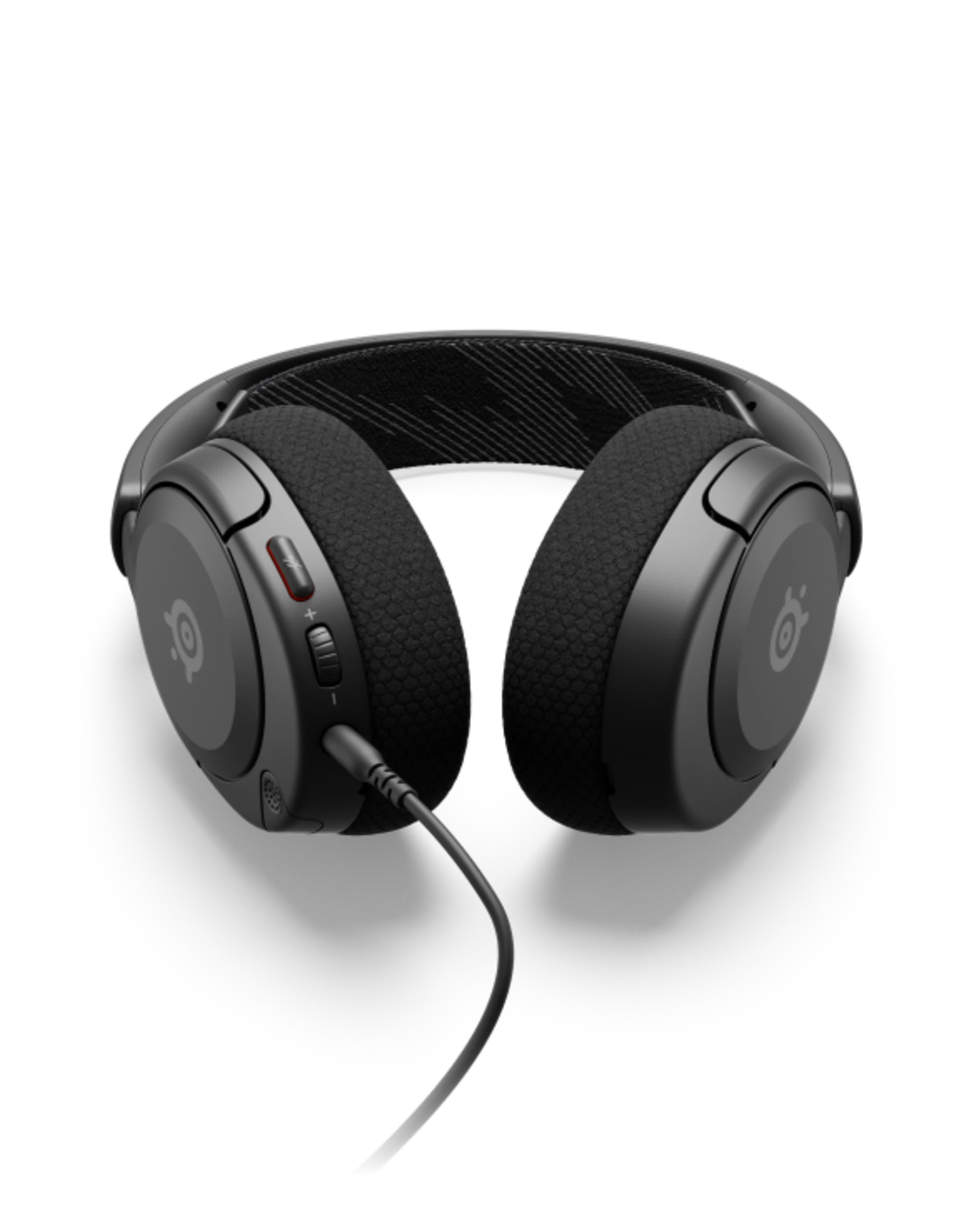
The SteelSeries Arctis Nova 1 reviewed here is the Black US model with SKU 61606. SteelSeries names it “Arctis Nova 1 - Black,” while the manufacturer product title describes it as a multi-platform wired gaming headset. That identity matters because the Nova range includes several numbered models and platform variants that should not be treated as interchangeable.
The practical decision is whether a straightforward analog headset suits your setup. The Nova 1 is built around a 3.5mm connection, physical controls and a retractable microphone. It does not approach the purchase as a wireless system with a receiver, battery or charging routine. Instead, it offers a relatively light over-ear design for devices that already provide a compatible audio jack.
Tom’s Hardware’s independent review characterizes the Nova 1 as sleek, comfortable and versatile, while making its analog-only design the main qualification. That is the right starting point for this product. The headset’s appeal is not a long list of built-in electronics; it is the possibility of getting game audio and voice chat through a familiar wired connection with little setup.
Connection and exact compatibility
The main cable uses a 4-pole 3.5mm connection. SteelSeries also says the headset includes a dual 3.5mm Y extension cable and describes that arrangement as compatible with PCs and Chromebooks. A device with one combined headset socket can use the main connection, while a computer with separate headphone and microphone sockets can use the split extension.
Tom’s Hardware reports that the box contains a 4-foot (1.2-meter) 3.5mm audio cable. It separately lists a 5-foot (1.5-meter) dual-3.5mm extension cable for a PC with separate headphone and microphone jacks. These cables solve different connection problems: the first is the ordinary headset lead, while the second divides the audio and microphone paths for a split-jack computer.
That adapter arrangement is more useful than a vague “multi-platform” label. Before buying, identify whether the intended device has a combined 3.5mm headset socket or two separate 3.5mm sockets. The supplied evidence specifically covers PCs and Chromebooks through the included extension, but it does not establish every possible adapter, dock or controller configuration.
The Nova 1’s analog design also sets the ownership pattern. There is no wireless pairing step described for this model, and the independent specifications list battery life as not applicable. You trade wireless movement and receiver-based convenience for a cable that does not need charging. That is a sensible exchange only if the source device is close enough and has the required jack.
The product family creates another shopping trap. Tom’s Hardware reports PC, PlayStation and Xbox versions, with small platform-related changes, plus black and white color options. This review concerns the Black US 61606. It is not a review of the Nova 1P, Nova 1X, Nova 3 or any wireless Nova headset, even though the names may look similar in a marketplace listing.
Fit and physical design
The headset uses a plastic headband, an adjustable elastic headband strap and height-adjustable rotating earcups, according to Tom’s Hardware. Those parts provide a fit system based on physical adjustment rather than powered mechanisms. The rotating earcups may also help the headset settle around the head once the strap and earcup height are set.
Tom’s Hardware describes the Nova 1 as using a four-point adjustment system and over-ear, or circumaural, construction. That gives the buyer more than a single headband adjustment: the strap and earcup positions both contribute to placement. It still does not remove the normal fit variables of head size, glasses, hair, ear shape or preferred clamp.
The independent review reports a weight of 8.3 ounces (235 grams), and calls the Nova 1 the lightest headset in the Arctis Nova series. Low weight is a meaningful design choice for someone who dislikes bulky headsets. It is not a substitute for checking fit, because a light headset can still feel wrong if its clamp or earcup opening does not suit the wearer.
The earcups are slimmer than those of the more elaborate Nova models. Tom’s Hardware attributes that profile partly to the absence of a battery, RGB lighting and removable speaker plates. The result is a less crowded physical design, but also a reminder that this is the stripped-down analog member of the family rather than a premium feature platform.
The cushions use memory foam covered in the breathable mesh fabric SteelSeries calls AirWeave. Tom’s Hardware reports that the cushions were roomy enough to surround the reviewer’s ears without pressing on them. That is an independent fit finding, not a universal result. Cushion space and comfort will vary with ear size, eyewear and how firmly the headset sits.
The styling is restrained rather than showy. Tom’s Hardware calls the appearance somewhat generic while noting that the slim earcups create a sleek profile. That may suit someone who wants gaming hardware that is not visually elaborate. It is less compelling for a buyer who expects metal construction, decorative lighting or a distinctive premium finish.
Controls and retractable microphone
The left earcup houses the main controls and connections. Tom’s Hardware identifies a microphone mute button, a volume wheel, a 3.5mm audio jack and the built-in microphone on that side. The arrangement keeps the essential controls reachable without requiring an application for basic volume or muting.
The microphone retracts into the left earcup on a flexible arm. SteelSeries specifies an important detail: the microphone can still pick up sound when retracted, but its directional design needs to be extended and close to the mouth for the best sound quality. Retraction is therefore a storage position, not the ideal position for speaking.
Tom’s Hardware identifies the microphone as a bidirectional ClearCast Gen 2 noise-canceling microphone. Its specifications list a frequency response of 100–10,000Hz and sensitivity of -38dBV/Pa. Those figures describe the reported microphone specification; they do not by themselves predict how every voice or room will sound.
The independent review reports loud, clear voice pickup but also says the bidirectional microphone struggles with noise isolation. That distinction matters for the buying decision. The Nova 1 may make sense for ordinary chat in a reasonably controlled room, while a noisy shared environment gives more weight to the microphone’s weaker rejection of surrounding sound.
A local mute button is useful when a quick physical control matters. The microphone’s retractable design is similarly practical for storage and for reducing visual clutter when chat is finished. Neither feature changes the analog signal path, however. The cable, source jack and computer or console audio system remain central to the headset’s operation.
Audio and PC processing
Tom’s Hardware reports a 40mm custom driver, 36Ω impedance and a 20–22,000Hz frequency response. Those are useful reference specifications, particularly when comparing the headset with other wired models. They should not be treated as a complete description of sound quality, because driver size and frequency range do not establish tonal balance or detail separation on their own.
The independent listening report describes restrained bass, stronger mids and highs, some lower-mid distortion and limited separation in certain music layers. It also reports that gaming audio and voice chat sounded particularly good, especially with Sonar. The sensible expectation is therefore gaming-oriented clarity at the expense of an unqualified recommendation for music listening.
SteelSeries says the Nova 1 and Nova 3 share the same fully custom speaker drivers tuned for high detail and clarity. That does not make the models equivalent overall: the Nova 1 remains the simpler analog headset. It does mean that a buyer should not assume the Nova 3 automatically uses different speaker drivers merely because it occupies a higher position in the lineup.
The headset works without companion software. Tom’s Hardware says the Nova 1 works out of the box and describes SteelSeries GG as the company’s universal peripheral software rather than a requirement for basic operation. That is useful for a shared computer or a device where installing software is undesirable.
On a PC, SteelSeries GG includes the Sonar audio suite. Tom’s Hardware reports that Sonar offers separate equalization for gaming, chat and microphone audio. The review also lists ChatMix, 360-degree spatial audio, gain adjustment and smart audio among its gaming features. These are computer-side processing options, not functions generated by the passive analog headset itself.
The platform qualification is decisive: Tom’s Hardware says the analog-only Nova 1 can access Sonar features when plugged into a PC. Therefore, Sonar should be treated as an optional PC benefit rather than a universal headset feature. On a console, Chromebook or other analog source, the basic connection remains the relevant consideration, while PC-specific processing should not drive the purchase.
Setup and ownership
Setup begins with the port check. Use the 4-pole 3.5mm connection with a combined headset socket. Use the dual 3.5mm Y extension when the computer separates headphone output and microphone input. Once connected, extend the microphone arm toward the mouth and use the left-earcup volume wheel and mute button for the basic controls.
The microphone’s behavior makes positioning more important than simply having a retractable arm. When chat is finished, retracting the arm keeps it stored in the earcup. When speaking, extending it and keeping it close to the mouth follows SteelSeries’ stated guidance for the directional microphone and addresses the independent review’s focus on voice pickup.
Maintenance is relatively uncomplicated because the supplied specifications describe a wired analog headset with no applicable battery life. The practical care priorities are physical: avoid sharply straining the cable, keep the plug clean and protect the ear cushions from avoidable grime. The supplied sources do not establish water resistance, replacement-cushion availability or a hard travel case, so those features should not be assumed.
The plastic exterior has a modest portability caveat. Tom’s Hardware says the headset does not feel flimsy, but also notes that its large, flat plastic areas may be susceptible to scratches. That is not evidence of a functional defect. It is a reason to give the headset some protection in a backpack rather than treating the outer finish as especially scratch-resistant.
Who should buy it
The Nova 1 fits a buyer with a suitable 3.5mm source who wants a light, over-ear wired headset, physical controls and a microphone that can disappear into the left earcup. A PC owner also gets the option of Sonar processing without needing that software for ordinary audio and chat.
It is a poor match for someone whose main requirement is wireless movement, Bluetooth, battery operation or receiver-based device switching. The analog-only design is the central limitation rather than a small missing feature. If the cable would regularly obstruct the intended setup, a wireless headset category is the more logical place to compare.
The microphone choice is conditional too. The independent review reports clear voice audio but weaker noise isolation from the bidirectional pattern. Select the Nova 1 when retractable storage and ordinary voice chat matter more than aggressive rejection of background sound. In a busy room, the microphone limitation deserves more attention than the attractive control layout.
Tom’s Hardware names the Asus TUF Gaming H3 and Razer BlackShark V2 X as cheaper gaming-headset alternatives. The supplied evidence does not provide current technical detail for either model, so it cannot support a feature-by-feature comparison. They are useful names to investigate if the Nova 1’s price position is the concern, not proven upgrades from these records.
Verdict
The Black SteelSeries Arctis Nova 1, model 61606, makes sense when analog simplicity is an advantage. Its 4-pole 3.5mm main connection, included split extension, light over-ear construction, physical controls and retractable microphone address the needs of a conventional wired gaming setup without requiring a battery or mandatory software.
Choose it if your device has the right jack arrangement, you prefer a lighter and slimmer headset, and PC-only Sonar processing is an optional extra. Choose another category if wireless freedom, Bluetooth, source switching or stronger background-noise rejection matters more. The Nova 1’s value is that its wired workflow is clear before purchase, not that it attempts to do everything.